Author: sharonstjoan
Poet, writer, and advocate for wildlife, wild lands, and the earth. President, Forest Voices of India - a U.S.-based group which aids charities in India that further education, culture, the well-being of women, children, and animals, and the restoration of sacred groves.
websites:
https://wordpress.com/view/forestvoicesofindia.com
https://wordpress.com/view/echoesinthemist.com
https://wordpress.com/view/wildvoices.world
book: Glimpses of Kanchi
https://www.amazon.com/Glimpses-Kanchi-Sharon-St-Joan/dp/1982901179/ref=sr_1_1?keywords=Glimpses+of+Kanchi&qid=1581769003&sr=8-1

Narina trogon in South Africa
This 16 September 2018 video says about itself:
Video of a male Narina Trogon, with the call added. Footage taken near Port Alfred, Eastern Cape, South Africa.
Snow geese in Canada
Plant survivors of Permian-Triassic mass extinction
This 26 February 2018 video from the USA says about itself:
The Permian-Triassic Boundary – The Rocks of Utah
The Great Dying! In this episode we head out to the Permian-Triassic boundary and try to discover what caused Earth’s Largest mass extinction event, 252 million years ago.
After 4-months of research, I’m excited to finally release this exciting video! A pre-print of the scientific paper is available here.
I’ve submitted this research to the journal “Global and Planetary Change” for peer review.
By Laurel Hamers, 2:12pm, December 20, 2018:
More plants survived the world’s greatest mass extinction than thought
Fossils in a Jordanian desert reveal plant lineages that didn’t perish in the Great Dying
Some ancient plants were survivors.
A collection of roughly 255-million-year-old fossils suggests that three major plant groups existed earlier than previously thought, and made it through a mass extinction that wiped out more than…
View original post 400 more words
winter owls and other magic moments.

This week has seen me brave the biting winds and winter cold to get out in some wildlife friendly farmland locally to check on the winter visitors. As I set out, on a fresh wintry morning I wished I’d remembered my woolly hat. I very soon forgot the inconvenience and was lost in wonder as my first bird was a hunting barn owl quartering a field just in front of me.
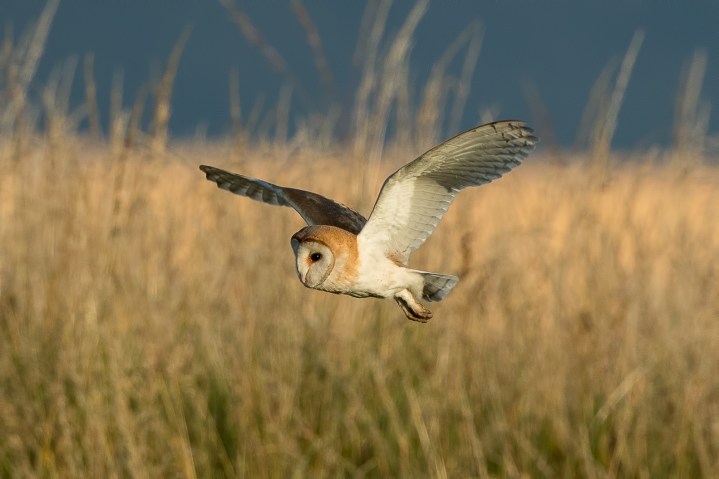 The silent hunting Barn owl
Photo Credit: Simon Stobart Flickr via Compfightcc
Soon after my barn owl and in amongst the expected crows.rooks and jackdaws came the next surprise as a single skylark flying up from some winter stubble heralding a further dozen which flew up and then washed away with the wind. A little further on in the lea of an overgrown farm garden and feeding on a winter seed patch another flock this time of
View original post 206 more words
Freed blonde orangutan girl Alba doing well
This 21 December 2018 video from Borneo in Indonesia says about itself:
Update on Alba’s Reintroduction
[Albino blonde orangutan girl] Alba [freed recently after reconvalescence] is doing very well, and has adapted quickly to her new home with friend Kika! Our PRM team has followed Alba since her return, waking at 3 a.m. before she rises to track her progress. Don’t worry, we will keep an eye on Alba and her pal.
Read more here.
Birding The Richmond Bay Trail 12/23/18

 Great Egret and Snowy Egret
The Richmond Bay Trail has many waterbirds at this time of year. We walked from the parking lot at Pt. Isabel to a little past the Meeker Slough cutoff. As it was a King Tide we hoped to see Ridgway’s Rail. We did get one quick look. Most abundant today were the Scaup, American Wigeons, Coots and White-crowned Sparrows. There continue to be Black-crowned Night-herons in the trees by the parking lot. We identified 40 species. Had we stayed longer we probably would have seen more shorebirds as the mudflats were still mostly underwater when we left.
 Northern Shoveler
Click Read more to see today’s Bird List
View original post 169 more words
Male Borneo frogs take care of tadpoles
This 16 October 2018 video from the USA says about itself:
Johana Goyes-Vallejos (UConn and KU): Do Female Frogs Call?
Dr. Johana Goyes-Vallejos discovers that in the smooth guardian frog of Borneo, female frogs call.
In frog species, typically male frogs call, while females stay silent. Dr. Johana Goyes-Vallejos shows that in the smooth guardian frog of Borneo (Limnonectes palavanensis) this is not the case and that female frogs call, too, producing spontaneous vocalizations to attract males. Dr. Goyes-Vallejos’ discovery that female frogs call suggests that L. palavanensis exhibits a reversal in calling behavior and possibly a sex-role-reversed mating system, which would be the first ever observed in a frog species.
Speaker Biography: Johana Goyes Vallejos received her bachelor’s degree in Biology from Universidad del Valle, in Cali, Colombia. For her Ph.D., she joined the lab of Dr. Kentwood Wells in the Ecology and Evolutionary Biology Department at…
View original post 1,523 more words
Beef-eating ‘must fall drastically’ as world population grows

Current food habits will lead to destruction of all forests and catastrophic climate change by 2050, report finds
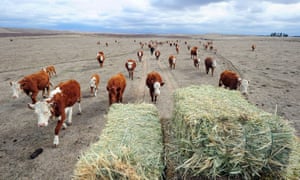
People in rich nations will have to make big cuts to the amount of beef and lamb they eat if the world is to be able to feed 10 billion people, according to a new report. These cuts and a series of other measures are also needed to prevent catastrophic climate change, it says.
More than 50% more food will be needed by 2050, according to the World Resources Institute (WRI) report, but greenhouse gas emissions from agriculture will have to fall by two-thirds at the same time. The extra food will have to be produced without creating new farmland, it says, otherwise the world’s remaining forests face destruction. Meat and dairy production use 83%…
View original post 653 more words


 Wild Voices