Giraffes, new research

petrel41's avatarDear Kitty. Some blog

This video is called Giraffes 101 | National Geographic Wild.

From the University of Bristol in England:

Giraffes surprise biologists yet again

May 18, 2018

New research from the University of Bristol has highlighted how little we know about giraffe behaviour and ecology.

It is commonly accepted that group sizes of animals increase when there is a risk of predation, since larger group sizes reduce the risk of individuals being killed, and there are ‘many eyes’ to spot any potential predation risk.

Now, in the first study of its kind, Bristol PhD student Zoe Muller from the School of Biological Sciences has found that this is not true for giraffes, and that the size of giraffe groups is not influenced by the presence of predators.

Zoe Muller said: “This is surprising, and highlights how little we know about even the most basic aspects of giraffe behaviour.”

This study…

View original post 485 more words

That NASA climate science program Trump axed? House lawmakers just moved to restore it

Robert A. Vella's avatarThe Secular Jurist

The House appropriations panel that oversees NASA unanimously approved an amendment to a 2019 spending bill that orders the space agency to set aside $10 million within its earth science budget for a “climate monitoring system” that studies “biogeochemical processes to better understand the major factors driving short and long term climate change.”

That sounds almost identical to the work that NASA’s Carbon Monitoring System (CMS) was doing before the Trump administration targeted the program, which was getting about $10 million annually, for elimination this year. Critics of the move said it jeopardized numerous research projects and plans to verify the national emission cuts agreed to in the Paris climate accords.

[…]

The bill now goes to the full House, and ultimately will need to be reconciled with a parallel bill in the Senate. It will likely be several months before Congress completes action on the 2019 budget.

Continue reading: 

View original post 14 more words

Concrete Jungles, Habitat For Humanity, Parrots

Crist Inman's avatarOrganikos

BilgerPetsThe state’s ecology is a kind of urban legend come true—the old alligator-flushed-down-the-toilet story, with a thousand species. Illustration by Charles Burns

When I first read this article about the downstream problems of the pet trade, I was living in India and learning about efforts to reduce the poaching crisis of wild animals being transported eastward as well as westward. Florida seemed a long way away and the problem Bilger described was a crisis, for sure, but it bordered on sounding, for lack of a better term, exotic. And maybe worthy of closer observation?

The Atlantic’s Emily Buder offers this post that includes an 8-minute video by Neil Losin. It immediately takes me back to the big picture:

The Legal ‘Pet-Poaching’ Problem

It’s easy to spot a wild parrot in Miami, as in San Francisco, San Diego, and several other metropolitan areas in the U.S. But in Florida…

View original post 251 more words

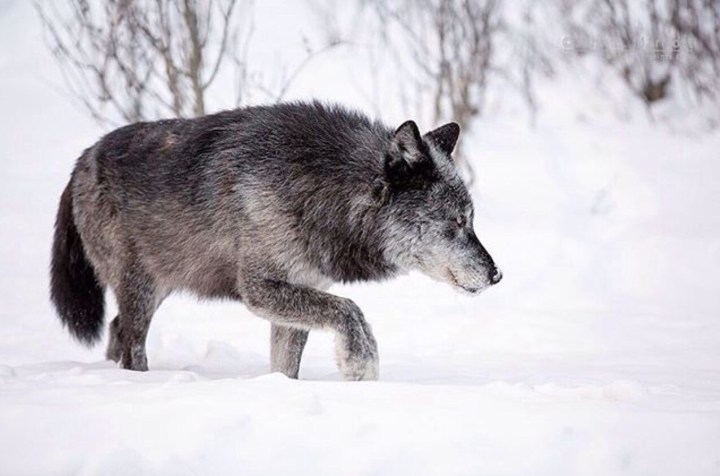
Urgent Action Required to Protect Wolves in the Great Lakes Region

Urgent Action Required to Protect Wolves in the Great Lakes Region

Rachel Tilseth's avatarWolves of Douglas County Wisconsin Film Company

The Farm Bill (H.R. 2, the Agriculture and Nutrition Act of 2018), scheduled to be brought to the House floor next week that has amendments to delist wolves in the Great Lakes region. Amendment number 85:

Representative Dan Newhouse (R-WA) submitted an amendment to remove ESA protections for gray wolves across the continental United States. This would not only place gray wolves in peril, but also undermine the ESA by taking away the decision-making power from scientists, as the law mandates, giving it instead to partisan members of Congress. This amendment also blocks judicial review, meaning that citizens can’t challenge the delisting in court. Shielding agency actions from review by independent federal courts violates citizens’ rights under the ESA and is simply undemocratic. Animal Welfare Institute

Contact your members in Congress clicking on this easy form democracy.io click here to write them.

View original post

Beavers clean water, new research

petrel41's avatarDear Kitty. Some blog

This video from the USA says about itself:

TITLE: Beaver Ponds As Crucial Habitat for a Sensitive Great Basin Amphibian

SPEAKER: Chad Mellison

AUTHORS: Kent Mcadoo and Chad Mellison

SYMPOSIUM: Restoring and Managing the “Emerald Islands” of the Sagebrush Sea: New Science, Sticks and Stones, and the Eager Beaver [held at the Society for Range Management Annual Meeting in Sparks, Nevada on Jan. 30, 2018]

From the University of Exeter in England:

Beavers do ‘dam’ good work cleaning water

May 9, 2018

Beavers could help clean up polluted rivers and stem the loss of valuable soils from farms, new research shows.

The study, undertaken by scientists at the University of Exeter using a captive beaver trial run by the Devon Wildlife Trust, has demonstrated the significant impact the animals have had on reducing the flow of tonnes of soil and nutrients from nearby fields into a local…

View original post 553 more words

405 thousand year climate cycle discovered related to Earth’s orbit around the sun

Iowa Climate Science Education's avatarIowa Climate Science Education

In ancient rocks, scientists see a climate cycle working across deep time.

A repeating shift in Earth’s orbit spans hundreds of millions of years

From THE EARTH INSTITUTE AT COLUMBIA UNIVERSITY

Scientists drilling deep into ancient rocks in the Arizona desert say they have documented a gradual shift in Earth’s orbit that repeats regularly every 405,000 years, playing a role in natural climate swings. Astrophysicists have long hypothesized that the cycle exists based on calculations of celestial mechanics, but the authors of the new research have found the first verifiable physical evidence. They showed that the cycle has been stable for hundreds of millions of years, from before the rise of dinosaurs, and is still active today. The research may have implications not only for climate studies, but our understanding of the evolution of life on Earth, and the evolution of the Solar System. It appears this week in the 

View original post 1,447 more words

Help saving English forest

Tree frog wakes up, video