Dinosaur age bird discovered in amber

petrel41's avatarDear Kitty. Some blog

This 11 July 2019 video says about itself:

The fossilised remains of a bizarre ancient bird that had middle toes longer than its lower legs have been found in a lump of amber from Myanmar. The elongated toe resembles those seen on lemurs and tree-climbing lizards, and illustrates the unusual lifestyle of some of the earliest birds that lived alongside the dinosaurs, researchers said.

From ScienceDaily:

Bird with unusually long toes found fossilized in amber

July 11, 2019

Meet the ancient bird that had toes longer than its lower legs. Researchers have discovered a bird foot from 99 million years ago preserved in amber that had a hyper-elongated third toe. The study, published in the journal Current Biology on July 11, suggests that this bird might have used its toes to hook food out of tree trunks. This is the first time such a foot structure has…

View original post 609 more words

Supervolcano fears: ‘Big One’ is coming

Exposing the Big Game's avatarThe Extinction Chronicles

California’s uncanny “earthquake pause” is over. It should have already had several “big ones” by now. All that pressure has to go somewhere. Now geologists are nervously eyeing eight nearby volcanoes. And why has Yellowstone supervolcano been acting so weird?

The U.S. Geological Survey (USGS) has warned Southern California to expect more big earthquakes to come. Some, they say, may even be more powerful than those experienced in the past few days.

“(These quakes do) not make (the Big One) less likely,” local seismologist Lucy Jones told The Los Angeles Times. “There is about a one in 20 chance that this location will be having an even bigger earthquake in the next few days, that we have not yet seen the biggest earthquake of the sequence.”

In part, that’s because California is…

View original post 703 more words

Lizard Land — Part 2 of 2

Jet Eliot's avatarJet Eliot

Green Iguana, Belize, native

Last week in Part 1 of this series we looked at lizards’ antipredator adaptations, camouflage, and size. Today we look at their skin, and various ways they move, sense, and communicate.

For starters, they are gloriously prehistoric. When you watch a lizard, especially the way it moves, it’s almost as if you are watching a dinosaur. The evolution of reptiles dates back 310-320 million years; more info here. 

Marine Iguana, Galapagos Islands

Blue-tongued Lizard pair, entwined, Sydney, Australia

Spiny-tailed Lizard, Ambergris Caye, Belize

Skin. Lizard skin is covered with overlapping scales made of keratin, providing protection from the environment. Scales also help prevent water loss, especially important in hot, dry deserts.

This photo shows the textured scales.

Western Fence Lizard, California

Tough and leathery, lizard skin is shed as the animal grows; they usually eat it for the minerals.

Locomotion.  Lizards live on the ground, in…

View original post 886 more words

Capuchin monkeys’ stone-tool use evolution

petrel41's avatarDear Kitty. Some blog

This June 2018 video says about itself:

White-faced capuchin (Cebus capucinus imitator) stone tool use in Coiba National Park, Panama

Higher Quality Supplemental Video from the paper “Habitual stone-tool aided extractive foraging in white-faced capuchins, Cebus capucinus.” Currently up on BioRxiV as a preprint and in peer review.

Preprint available here.

By Bruce Bower, 11:00am, June 24, 2019:

Capuchin monkeys’ stone-tool use has evolved over 3,000 years

A Brazilian site shows the animals’ long history of selecting various types of pounding devices

Excavations in Brazil have pounded out new insights into the handiness of ancient monkeys.

South American capuchin monkeys have not only hammered and dug with carefully chosen stones for the last 3,000 years, but also have selected pounding tools of varying sizes and weights along the way.

Capuchin stone implements recovered at a site in northeastern Brazil display signs of shifts during the last three millennia…

View original post 608 more words

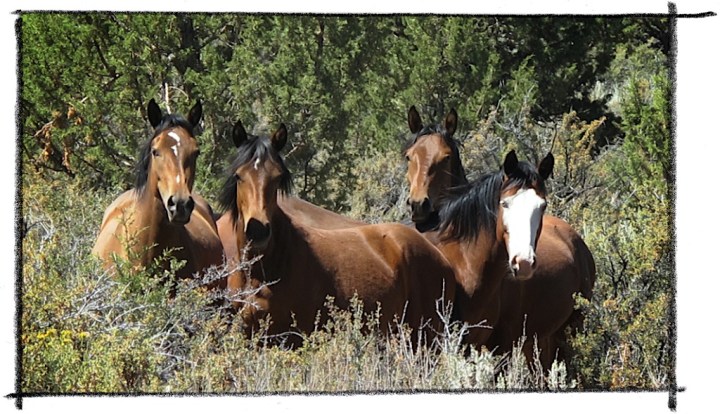
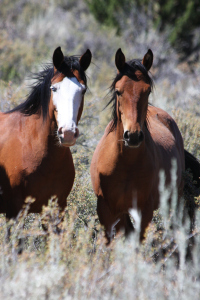
ACTION ALERT: Comment by July 1st to save the Twin Peaks HMA’s wild horses & burros

ACTION ALERT: Comment by July 1st to save the Twin Peaks HMA’s wild horses & burros

debbiecoffey's avatarStraight from the Horse's Heart

Twin Peaks Horses prior to a past Helicopter Stampede ~ photo by Terry Fitch

by Debbie Coffey, V.P. & Dir. of Wild Horse Affairs, Wild Horse Freedom Federation

A Bureau of Land Management (BLM) “News” Release, claims there are about 3,500 wild horses and 600 wild burros in the Twin Peaks Herd Management Area (HMA).  This HMA includes 656,173 acres of BLM administered lands in Lassen County, Calif., and Washoe County, Nev.

Wild Horse Freedom Federation believes these BLM estimates are wildly exaggerated and that BLM’s proposed 10 year removal plan will decimate the wild horses and burros on the Twin Peaks Herd Management Area (HMA).

The BLM has set the “Appropriate Management Level” (AML) in this HMA for wild horses as only 448-758 and for wild burros as only 72-116.  The high AML of 116 is not even a high enough number for a viable herd of burros.

View original post 6,497 more words

Beluga whales from aquarium to sanctuary

petrel41's avatarDear Kitty. Some blog

This 22 June 2019 video says about itself:

Two beluga whales make epic journey from China to Iceland sanctuary

Two beluga whales from an aquarium in Shanghai have arrived in Iceland on June 19 to live out their days in a unique marine sanctuary that conservationists hope will become a model for rehoming some 3,000 of the creatures currently in captivity.

View original post