Panamanian lance-tailed manakins dancing

petrel41's avatarDear Kitty. Some blog

This video says about itself:

Hail Hail The Lance-tailed Manakin Gang’s All Here – April 5, 2019

A female, two adult males and a juvenile male all shared the display perch at once today. The males took turns practicing their display. The juvenile male in attendance got a thorough and vigorous dance lesson.

Watch Live at http://allaboutbirds.org/manakins

This cam shows one display perch in a population of Lance-tailed Manakins on Isla Boca Brava, Chiriquí, Panamá, that has been monitored intensively since 1999.

View original post

Green Winged & Scarlet Macaws~

cindy knoke's avatarCindy Knoke

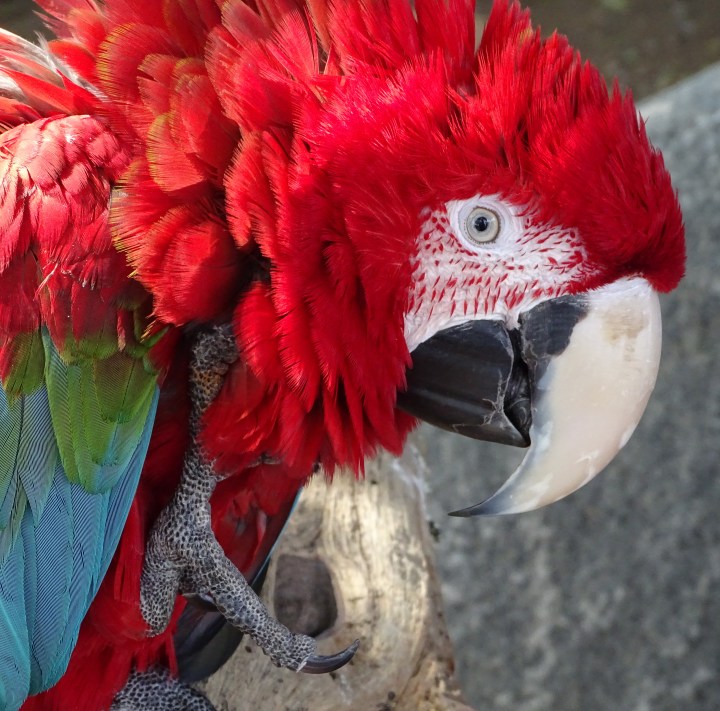
Green Winged Macaws have green feathers on their wings and red feathers on their faces. They are red, green and blue, and live in South America.

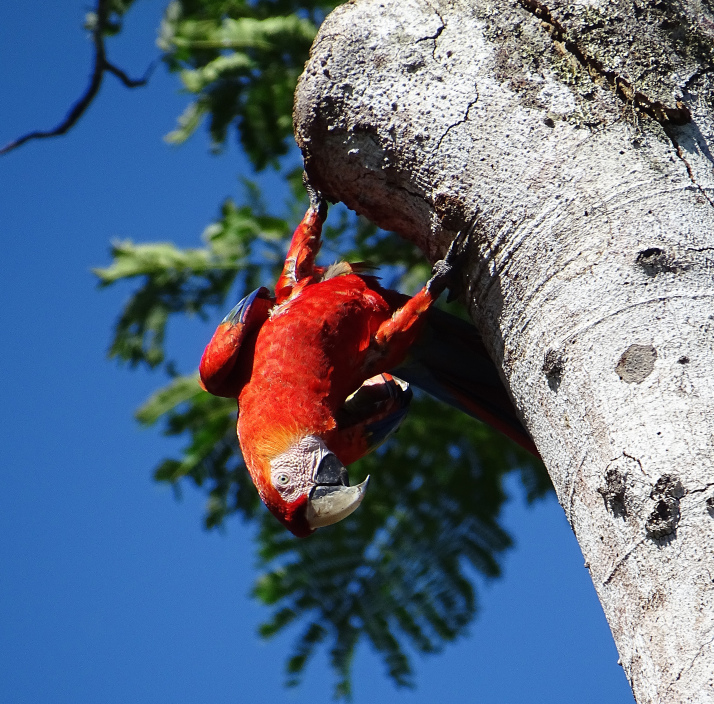
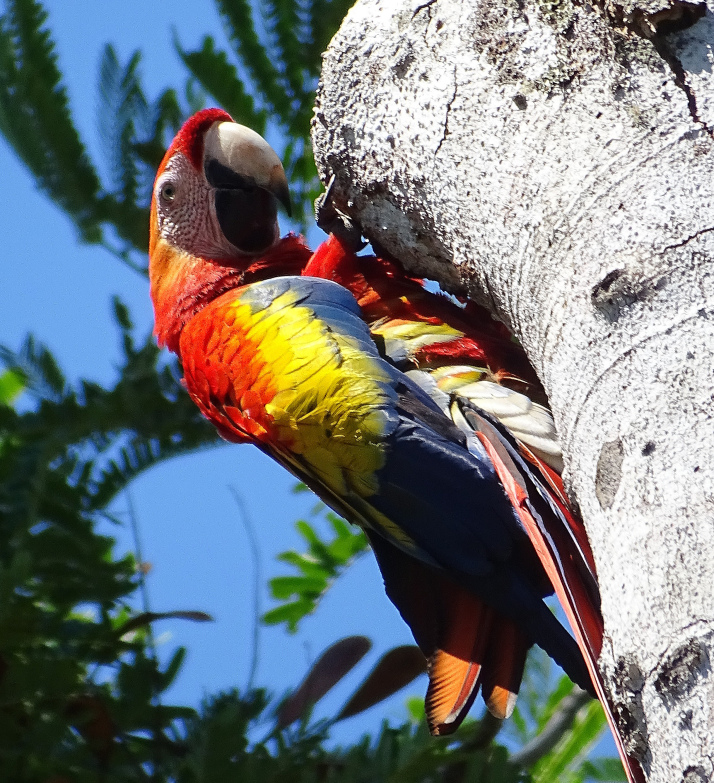
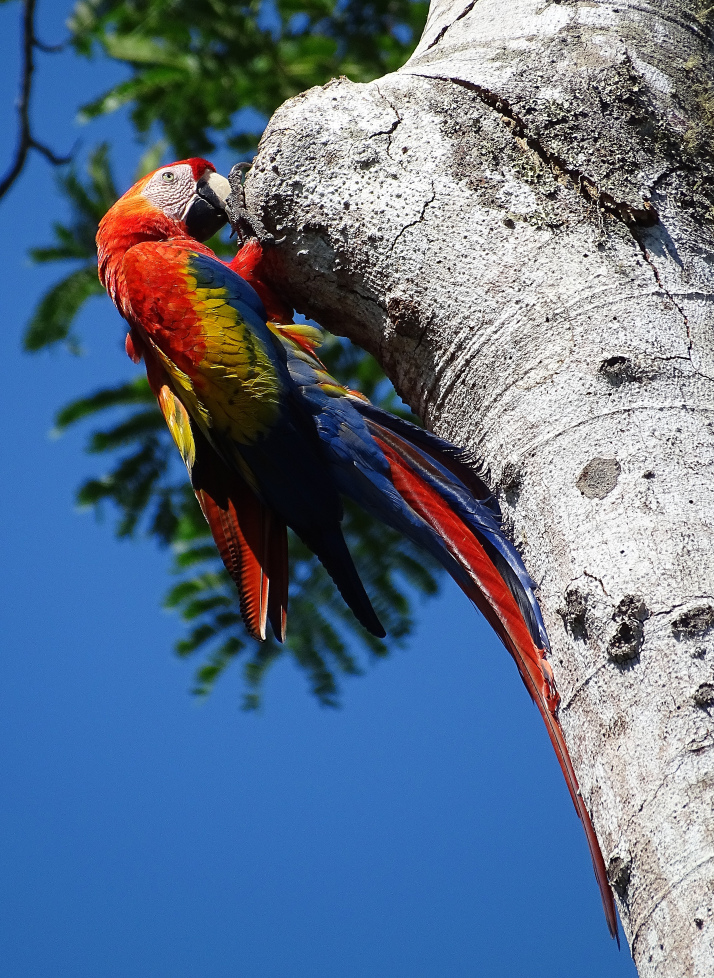
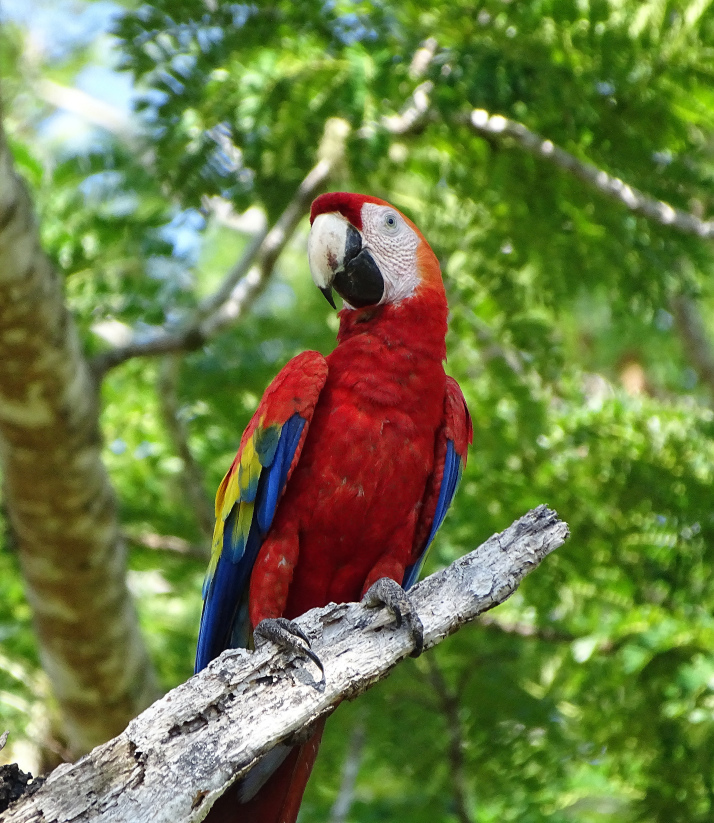
Scarlet Macaws are red, yellow and and blue, with white faces.

Scarlets live in South and Central America and Mexico.

I was amazed to come upon this friendly scarlet in Costa Rica.

I couldn’t figure out why he was performing for me, until his mate turned up, and I realized they were feeding their chick in a nest in the hollow of this tree.

I have never seen nesting wild macaws so this was quite a thrill!

Macaw populations are scattered in the wild and rare to find.

Their numbers have been decimated by habitat destruction and the pet parrot trade.

Macaws are highly intelligent and mate for life.

Cheers to you from the incredible Scarlet and Green Winged Macaws~

View original post

Arctic terns, their overland migration

petrel41's avatarDear Kitty. Some blog

This 8 October 2018 video says about itself:

The Arctic Tern, the longest known migration known in the animal kingdom.

It was long believed that Arctic terns flew about 22,000 miles (35,200 km) on their journey from the Arctic region to Antarctica and back. Recent studies, however, revealed that the birds actually fly much farther.

Tiny instruments called geolocators were attached to a number of birds. About the weight of a paper clip, these amazing devices revealed that some terns flew an average of 56,000 miles (90,000 km) on the round-trip—the longest animal migration known. One bird flew nearly 60,000 miles (96,000 km)!

Why the revised estimates? No matter where they began their migration, the Arctic terns flew an indirect route. As shown in the illustration, a common Atlantic Ocean route took an S shape. The reason? The birds simply take advantage of prevailing wind systems. During their lifetime…

View original post 919 more words

Citing climate change, U.S. judge blocks oil and gas drilling in large swath of Wyoming

Exposing the Big Game's avatarThe Extinction Chronicles

The lawsuit challenged leases issued in Wyoming, Utah and Colorado in 2015 and 2016, during President Barack Obama’s administration.
Image: Climate Change Impact, Oil, Gas

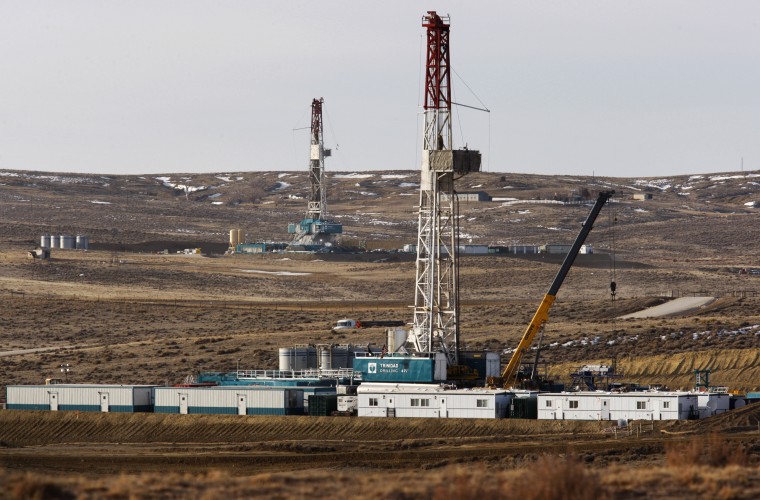
Trinidad Drilling rigs are seen off of Way Highway 59 outside of Douglas, Wyo on March 5, 2013. A judge has blocked oil and gas drilling on almost 500 square miles in Wyoming and says the government must consider cumulative climate change impacts of leasing public lands across the U.S. for energy development. Leah Millis / The Casper Star-Tribune via AP file

By Associated Press

BILLINGS, Mont. — A judge blocked oil and gas drilling across almost 500 square miles in Wyoming and said the U.S. government must consider climate change impacts more broadly as it leases huge swaths of public land for energy exploration.

The order marks the latest in a string of court rulings over the past decade — including one last month in Montana — that have faulted the…

View original post 692 more words

My Favorite River

Jet Eliot's avatarJet Eliot

Elephants in Chobe River

Our California winter this year has been blessed with abundant rain. As I walked in my neighborhood park last week, I marveled at the numerous rivers and streams.

I pondered what my favorite river on earth was, thought about it all week.

Rivers traverse all the continents. Over the centuries, cities have been founded on rivers for their power. They support large populations, and carry heavy loads of people and products. Rivers are the basis for the growth of civilization.

I have known so many rivers. How could I pick just one? Could you?

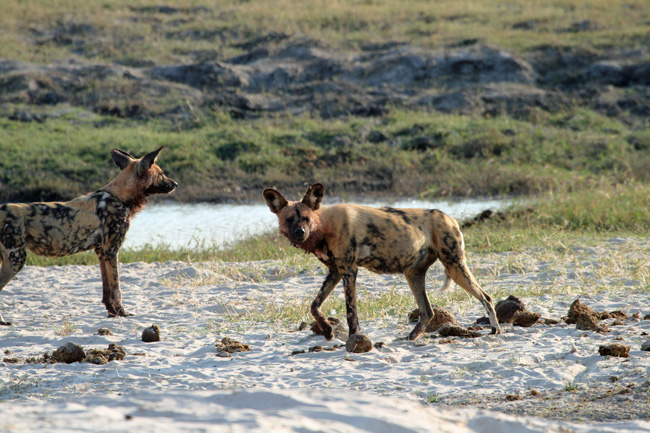
One favorite at the top of my thoughts: the Chobe River in Botswana. A popular watering place for African game. We watched wild dogs celebrating a kill, elephants crossing, and hundreds of ungulates.

Wild Dogs, Chobe River Nat’l Park, Botswana

Chobe River, zebra crossing from Botswana into Namibia

Waterbuck, Chobe River, Botswana, Africa

Then…

View original post 534 more words

ACTION ALERT: Please Comment by March 17 to Save the Wild Horses and Burros of Warm Springs in Oregon

debbiecoffey's avatarStraight from the Horse's Heart

by Carol Walker Director of Field Documentation for Wild Horse Freedom Federation

We won our lawsuit to prevent the gruesome sterilization experiments that the BLM proposed conducting on 100 mares from the Warm Springs HMA, which is almost 500,000 acres.  I, American Wild Horse Campaign, the Cloud Foundation and Animal Welfare Institute blocked the study by our lawsuit.  The BLM dropped the experiments from their plan for the HMA, and now they have decided to release a devastatingly small number of wild horses and no burros back into the Herd Management Area despite having removed almost 100% of the wild horses and burros during the roundup in 2018: The helicopter roundup removed 846 wild horses and 41 burros. These wild horses and burros are currently being held at the BLM Burns Corrals in Hines, Oregon.  They plan to release only 66 wild horses and zero burros.  This would leave 1…

View original post 314 more words

Californian sea otters and archaeology

petrel41's avatarDear Kitty. Some blog

This September 2018 says about itself:

Cute Sea Otter Behaviour Decoded

From holding paws to rubbing their faces, sea otters are otter-ly adorable. But why do they do it? Discover the science behind the cute.

From the Max Planck Institute for the Science of Human History in Germany:

Sea otters’ tool use leaves behind distinctive archaeological evidence

Researchers used an interdisciplinary approach combining ecology and archaeological methods to study sea otters’ past behavior

March 14, 2019

An international team of researchers has analyzed the use by sea otters of large, shoreline rocks as “anvils” to break open shells, as well as the resulting shell middens. The researchers used ecological and archaeological approaches to identify patterns that are characteristic of sea otter use of such locations. By looking at evidence of past anvil stone use, scientists could better understand sea otter habitat use.

Sea otters are an especially captivating marine mammal…

View original post 735 more words

Five Minutes with a River Otter

Jet Eliot's avatarJet Eliot

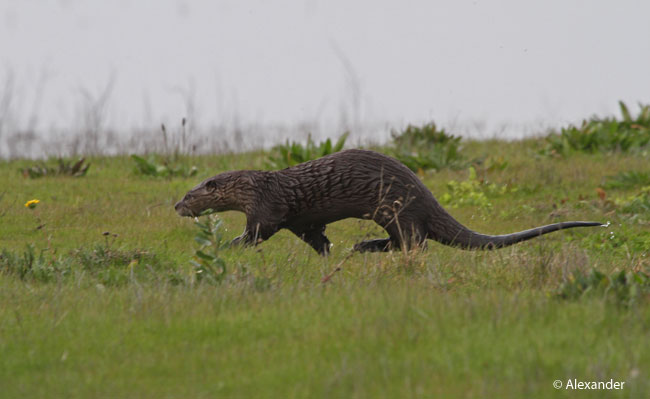
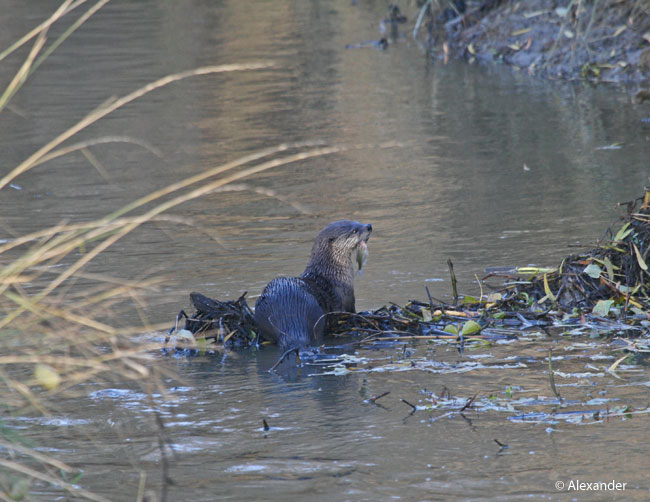
River Otter walking

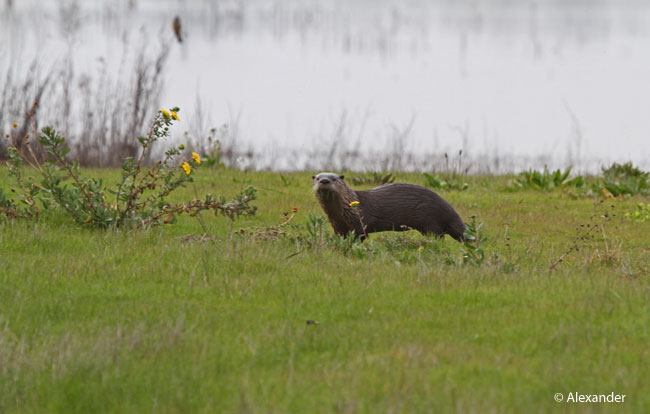
In January I went to a flooded agricultural field to observe ducks and cranes. At one point there was a curious underwater movement…unidentifiable. We waited, and watched. And a river otter popped out!

River otter swimming in field

We have been going to this field for three decades, have spent close to 50 hours observing wildlife on this one field. Every winter it is loaded with songbirds, ducks, cranes, raptors, waders, and more…but we have never seen an otter here.

Flooded field with ducks, January 2019. Compare this scene to the photo below from January 2014.

We have, however, seen the river otter hunting on a nearby river several times.

River otter with fish. December 2008

There are 13 species of otters on earth, and they are all aquatic in nature, feeding primarily on fish and invertebrates. In North America we have the river otter (our focus…

View original post 426 more words

RESTORING ARCTIC ICE IS THE KEY TO CURBING CLIMATE CHANGE—SO WHY ARE WE IGNORING IT?

Exposing the Big Game's avatarThe Extinction Chronicles

This dangerous ice loss can be reversed, and the emerging field of climate restoration is yielding surprising solutions to the challenges of global warming.
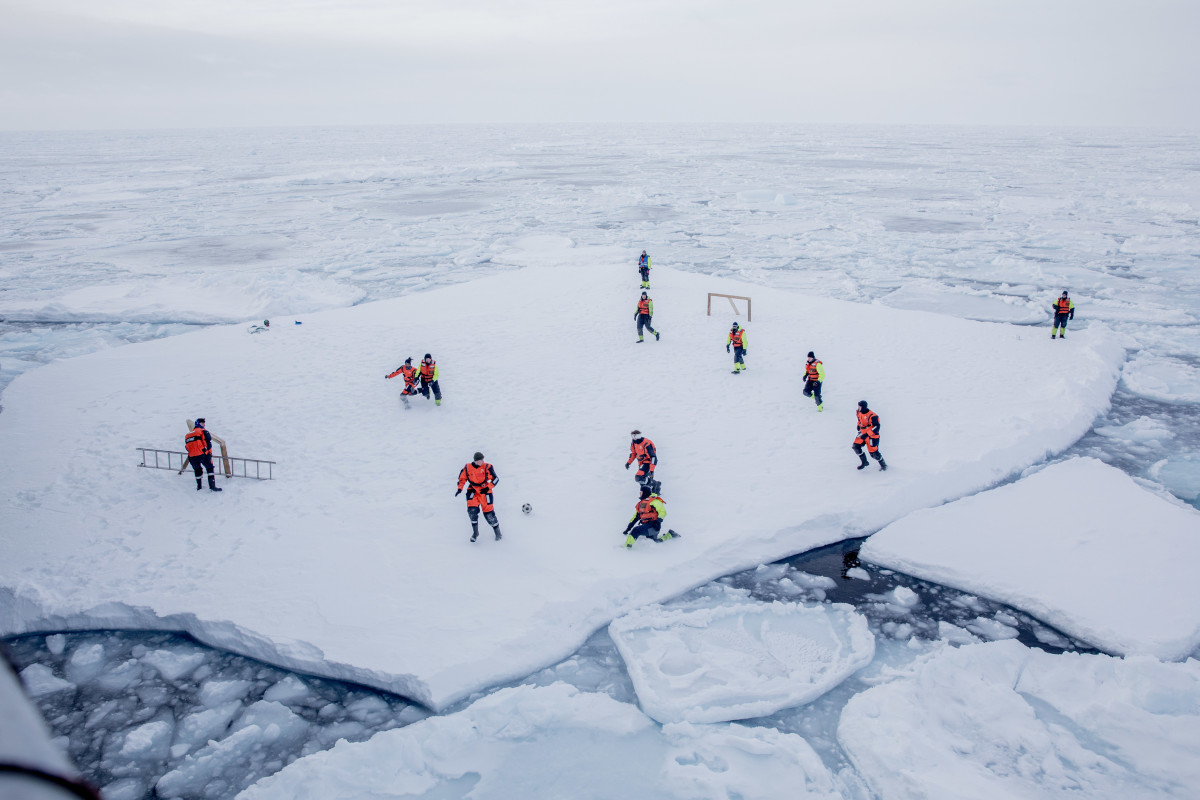
The crew of patrol vessel KV Svalbard and scientists from the Norwegian Institute of Marine Research play football on a floe of offshore ice on March 22nd, 2018, in the sea around Greenland, while two armed guards keep watch for polar bears.

The crew of patrol vessel KV Svalbard and scientists from the Norwegian Institute of Marine Research play football on a floe of offshore ice on March 22nd, 2018, in the sea around Greenland, while two armed guards keep watch for polar bears.

(Photo: Marius Vagenes Villanger/AFP/Getty Images)

A series of scientific reports released in the last few months found that Arctic ice is melting at an accelerated and catastrophic rate—the fastest rate in the last 350 years. If it continues at that rate, the Arctic could be completely free of summer ice by the year 2030, or even sooner. The most recent study, which concentrated on the southwest part of Greenland—a region with few large glaciers, and one which was previously…

View original post 1,437 more words

Fin whales and mountain gorillas back from the brink of extinction thanks to conservation efforts

Exposing the Big Game's avatarExposing the Big Game

‘With sustained, long-term conservation action, we can not only prevent extinctions, but also achieve considerable population recoveries’

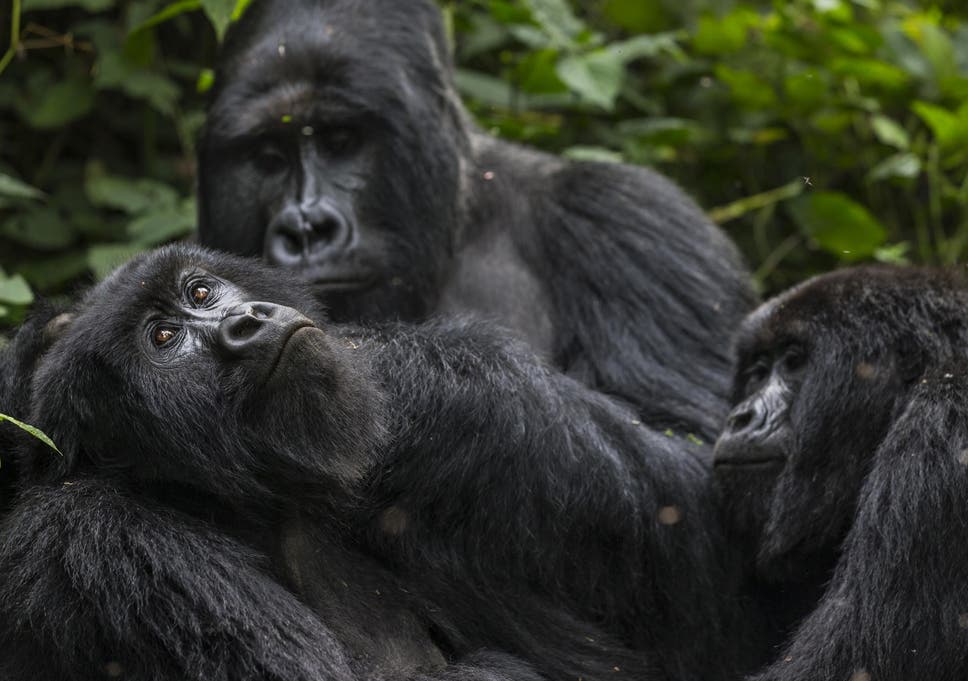
Anti-poaching efforts have helped boost mountain gorilla numbers by hundreds in recent decades
Anti-poaching efforts have helped boost mountain gorilla numbers by hundreds in recent decades ( Getty )

There is hope for the survival of fin whales and mountain gorillas after conservationists announced both species have been pulled back from the brink of extinction.

After decades of persecution by whaling vessels and poachers, modern efforts to protect these mammals appear to be working as their numbers have started to recover.

The International Union for Conservation of Nature (IUCN) maintains a “red list” to monitor the status of the world’s wildlife, and in its latest update both whales and gorillas have shifted one step further away from becoming new entries on the long list of species wiped out by humanity.

After…

View original post 588 more words