Red wolves nearing extinction — only 40 left in the wild

Exposing the Big Game's avatarCommittee to Abolish Sport Hunting Blog

LINKEDIN 1COMMENTMORE

Only 40 endangered red wolves remain in the wild in the U.S., and the population could go extinct within eight years, according to a report recently released by the U.S. Fish and Wildlife Service.

“Time is running out for red wolves,” said Collette Adkins, a biologist and senior attorney at the Center for Biological Diversity. “We need to move fast if we’re going to keep them from disappearing forever.”

Once a common sight across the entire southeastern U.S., the red wolf was listed as endangered in 1967 and first declared extinct in the wild in 1980, according to the Fish and Wildlife Service…

View original post 370 more words

Animal conservation group trying to save Vancouver Island wolves

Exposing the Big Game's avatarThe Extinction Chronicles

File photo. An environmentalist group is trying to drum up petition signatures to stop the Ministry of Forests from extending wolf trapping season on Vancouver Island by two months.

File photo. An environmentalist group is trying to drum up petition signatures to stop the Ministry of Forests from extending wolf trapping season on Vancouver Island by two months.

– A A +

Conservation group ‘Pacific Wild’ has launched a petition in an effort to save wolves on Vancouver Island, and hope enough people will sign before Saturday.

The group is putting the word out because the Ministry of Forests has proposed extending wolf trapping to increase the elk population.

According to the Ministry, the proposal is to extend the trapping season by two months: Sept. 10 through to June 30, because the wolf population has risen while the elk population remains too small and isn’t showing any signs of growing.

Pacific Wild Executive Director Ian McAllister said if the proposal goes through, those traps could kill pups and…

View original post 320 more words

Redshank calls on pole, video

Targeted Grazing Scam

R.T. Fitch's avatarStraight from the Horse's Heart

ByGeorge Wuerthner as published on The Wildlife News

The Idaho BLM is implementing what is sometimes called “targeted grazing” with livestock in an effort to reduce large wildfires. The theory is that if livestock graze enough of the “fuel”, then large wildfires like the 600,000 Murphy Complex or the Soda Fire which burned across southern Idaho in recent years could be more easily controlled.

On the surface, this strategy seems plausible. Less fuel should mean fewer large fires. But here’s the rest of the story.

First, nearly all the acreage burned annually is the result of a very few large fire complexes. For instance, in the years 1980-2003 there were 56,320 fires in the Rocky Mountain states. Of those fires, 96% of the blazes were responsible for charring only 4% of the total acreage burned. By contrast, 0.1% of the fires—less than 50—were responsible for over half the acreage…

View original post 460 more words

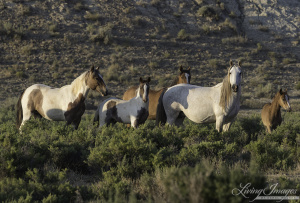
BLM Lays Out Plan to Manage Wild Horses and Burros to Extinction

debbiecoffey's avatarStraight from the Horse's Heart

The Bureau of Land Management Lays Out the Plan to Manage Wild Horses and Burros to Extinction

By Debbie Coffey and Carol Walker, Wild Horse Freedom Federation

4/30/18

The BLM has submitted a report to Congress “Management Options for a Sustainable Wild Horse and Burro Program” with recommendations on managing the wild horses and burros on our public lands as well as the 46,000 held in short and long term holding facilities.

Some of the suggestions include killing (misidentified as “euthanasia”) 10,000 wild horses and burros, massive roundups of 50,000 wild horses and burros currently on our public lands, then sterilizing 80% of the wild horses and burros that remain, and removing limitations on sale of these wild horses and burros, which exposes them to the risk of sale to slaughter. The options offered in this report would not lead to sustainability, but to the extinction of wild horses and…

View original post 1,397 more words

The BLM Releases Plan to Congress that will Ensure Extinction of Wild Horses and Burros on Our Public Lands

R.T. Fitch's avatarStraight from the Horse's Heart

From Wild Horse Freedom Federation

The Bureau of Land Management just released its plan to Congress for managing wild horses and burros on our public lands.

The options offered in this report would not lead to sustainability but instead would lead directly to the extinction of wild horses and burros on our public lands with the next 10-20 years.

False claims such as thousands of starving and dying horses on the range, and the horses being the source of any and all range degradation are at the heart of their argument. The BLM proposes to remove 50,000 wild horses and burros from our public lands. They want to remove protections from our wild horses and burros that will lead to tens of thousands of wild horses being killed and slaughtered, and kill the wild horses and burros in holding facilities. This is not “euthanasia,” these are healthy wild horses and…

View original post 163 more words

Debunking Common Myths About Horse Slaughter and the Protection of America’s Wild Horses and Burros

debbiecoffey's avatarStraight from the Horse's Heart

Source:  One Green Planet

By Susan Wagner, Equine Advocates and Carol Walker, Wild Horse Freedom Federation

Since 2007, when the last horse slaughterhouse operating in this country closed its doors, attempts by special interest groups in ranching, oil and gas, mining, and the gun lobby, to return this repulsive and unpopular practice to U.S. soil have been made at every opportunity. Fortunately, they’ve failed. Horse slaughter proponents love to claim that slaughter is a form of humane euthanasia. Nothing could be further from the truth. Regardless, slaughtering horses for food goes against our very culture, which is why they are not bred for that purpose and never will be.

Equines are routinely given drugs that are banned in animals bred for human consumption, including Phenybutasone or “Bute,” the most common medication administered to equines. Bute is an anti-inflammatory drug and the subject of a 2010 landmark study (Marini-Dodman), which documented…

View original post 499 more words

Private Livestock grazing on federal public lands is a privilege — not a right

R.T. Fitch's avatarStraight from the Horse's Heart

as published on The Hill

Welfare Ranching is EXACTLY that!!!

Recently, the Hage family of central Nevada has become the poster boy for ranchers supposedly victimized by federal law enforcement. But far from being victims of a repressive federal bureaucracy, the Hage family demonstrates the vulnerability of our western public lands to the livestock industry.

The Hage family have played significant role in the “Sagebrush Rebellion,” a political movement aimed at utilizing western public lands for the benefit of the livestock industry.

The Hage family cattle were impounded in 1991 for repeatedly trespassing and overgrazing on Forest Service lands. That year, Wayne Hage Sr. sued the federal government for suspending his grazing lease, arguing that he had purchased the local water rights and therefore possessed a sort of squatter’s right to graze on neighboring public lands.

Wayne Hage Jr. picked up where his father left off…

View original post 799 more words

Save The Frogs Day April 28, 2018

Sandy Steinman's avatarNatural History Wanderings

In an effort to raise awareness of the plight of amphibians, the scientific community has declared Saturday April 28th, 2019  ‘Save The Frogs Day’. On this day we encourage the appreciation and celebration of amphibians by people from all walks of life. Only a small proportion of the public is aware that frogs are disappearing, and amphibian conservation efforts will not be successful with an un-informed public. Our goal is to make the amphibian extinction crisis common knowledge, and Save The Frogs Day is our best way to make this happen!

To learn more and find local events go to: Save The Frogs Day

View original post

Saving forest elephants saves forests

petrel41's avatarDear Kitty. Some blog

This 2013 video says about itself:

The Dzanga Bai, a small clearing in the Central African Republic, is a unique haven for endangered forest elephants. As many as 200 at a time will gather in this open area to eat minerals found in the soil. The Bai is part of the protected Dzanga-Ndoki National Park, but poachers recently entered the park killing more than two dozen elephants. This video shows elephants enjoying the Bai and reveals efforts to again make it a safe haven for the African forest elephant, a species whose numbers have been reduced by more than 60% in the past decade.

From the Carl R. Woese Institute for Genomic Biology, University of Illinois at Urbana-Champaign in the USA:

Protect forest elephants to conserve ecosystems, not DNA

April 25, 2018

Although it is erroneously treated as a subspecies, the dwindling African forest elephant is…

View original post 506 more words