This video is about a calling red-throated loon, with youngster, in Sweden.
This video is about two calling red-throated loons, feeding their youngster, in Sweden.
About wildlife, wild lands, and honoring the intrinsic value and beauty of the world of nature.
This video is about a calling red-throated loon, with youngster, in Sweden.
This video is about two calling red-throated loons, feeding their youngster, in Sweden.

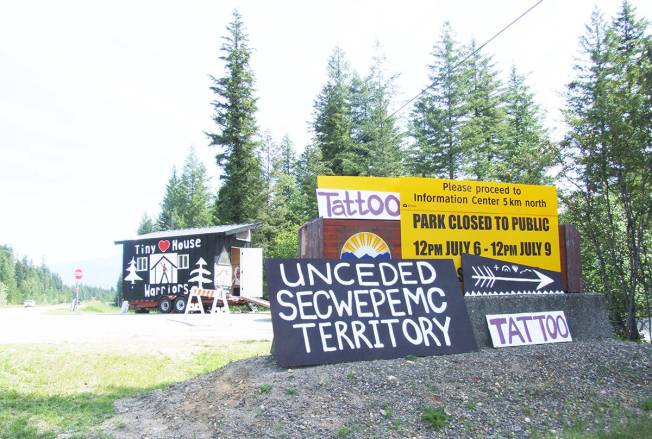
An Indigenous group calling itself the Tiny House Warriors has moved into the North Thompson River Provincial Park near Clearwater, B.C., in an effort to block the Trans Mountain pipeline expansion.
Group spokeswoman Kanahus Manuel says they are reclaiming an ancestral village their people were forced from many years ago, while at the same trying to prevent the expansion of the pipeline through their traditional territory.
Manuel says they have moved into the site and will be building tiny houses on the land in an action that has the approval of the hereditary chiefs of the Secwepemc First Nation.
She says Indigenous land defenders within the group will resist the construction of the pipeline through their territory.
A statement from the provincial Ministry of Environment says B.C. Parks is maintaining the closure of the area while efforts are made to respectfully resolve the situation and it is offering refunds to…
View original post 146 more words
(Some may find this thought a little gloomy.) In a world of increasing chaos and a fragmenting world order, it seems likely that humanity’s ability to build giant-scale infrastructures will diminish. If so, this will lessen the overpowering environmental impact that these kinds of structures have and will make lighter the heavy hand of humanity that oppresses the natural world. There will still be all the cumulative effects of pollution and toxicity run out of control. But the towering Golitath that is the human giant may be entering a stage of collapse, and that may offer some relief to wildlife and wild lands. We’ll see.
 Construction of the second phase of the Chinese-financed Standard Gauge Railway in Kenya crosses through Nairobi National Park, as pictured here in June. YASUYOSHI CHIBA/ AFP/ GETTY IMAGES
Thanks to William Laurance for this informative opinion essay that gives a bit of hope for wilderness preservation:
Is the Global Era of Massive Infrastructure Projects Coming to an End?
The world’s wild places have been badly carved up by decades of roadbuilding, dam construction, energy exploitation, and other megaprojects. Now, as the financial community, environmental groups, and local citizens increasingly oppose big infrastructure development, the tide of environmental destruction may be turning.
Malaysia’s former Prime Minster Najib Razak, third from left, looks at a model of the China-backed East Coast Rail Link in 2017. Malaysia has since canceled the project due to mounting costs. AP PHOTO
We are living in the most explosive era of infrastructure expansion in human…
View original post 271 more words
Caution: disturbing content

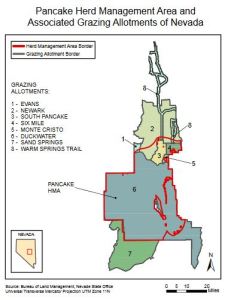
THERE WOULD LIKELY BE WATER FOR WILD HORSES ON THIS HMA IF PRIVATELY OWNED LIVESTOCK WEREN’T USING IT UP. In the BLM Press release below, the BLM states “With a current population of approximately 2,160 wild horses, valuable resources have been depleted, affecting the health of those animals.” So, before reading the BLM’s press release below, keep in mind that the BLM authorizes the following privately owned livestock grazing on 100% public lands in the Pancake HMA (these aren’t all of the active grazing allotments on this HMA, we’re just giving you the gist of it. The information below is from the BLM’s Rangeland Administration System):
Duckwater Allotment …
View original post 769 more words
Caution: disturbing content

“Beef, it’s what’s for dinner. With a large side of wildlife slaughter.” ~ Madravenspeak column, “Federal Wildlife Services Program Serves Up Poison”
“Jane Goodall gave the documentary about (U.S. Department of Agriculture’s) Wildlife Services, “EXPOSED,” rave reviews and wants millions to see it,” according to the website Predator Defense. “(W)histle-blowers go on the record showing Wildlife Services for what it really is — an unaccountable, out-of-control, wildlife killing machine that acts at the bidding of corporate agriculture and the hunting lobby, all with taxpayer dollars.” It’s on YouTube here.
“The U.S. government is using your tax money to wage a war against wild animals so that ranchers raising livestock for meat can keep getting richer,” according to Sarah V. Schweig, writing on the website The Dodo.
In 1895, the U.S. Department of Agriculture’s Wildlife Services was initiated to promote beef production and control natural predators and rodents. It responds to…
View original post 709 more words
Source: wildhoofbeats.com

Water is life, especially for nursing mothers
by Carol J. Walker, Dir. of Field Documentation for Wild Horse Freedom Federation
The BLM has produced a Determination of NEPA Adequacy instead of an Environmental Assessment for the Sand Wash Basin Herd Management Area and this is a plan that will be in effect for 10 years with no further opportunity for the public to comment. The BLM plans to remove approximately 584 of the 825 wild horses estimated that live in Sand Wash Basin, bringing the number of wild horses remaining to 163, the low end of the Appropriate Management Level. This includes all the 70 horses that live outside the HMA and also includes foals from this year, which will most likely bring the total of wild horses to be removed to 662.
Here is the current document dated 6/4/2018: http://www.wildhoofbeats.com/wp-content/uploads/2018/07/DOI-BLM-CO-N010-2018-0025-DNA.pdf
Wild Horse Freedom Federation will be doing…
View original post 692 more words
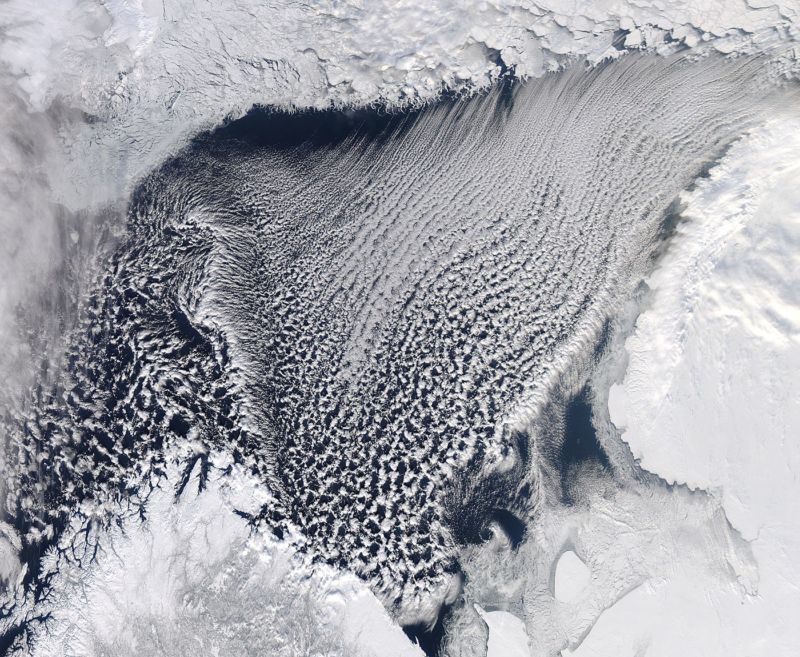
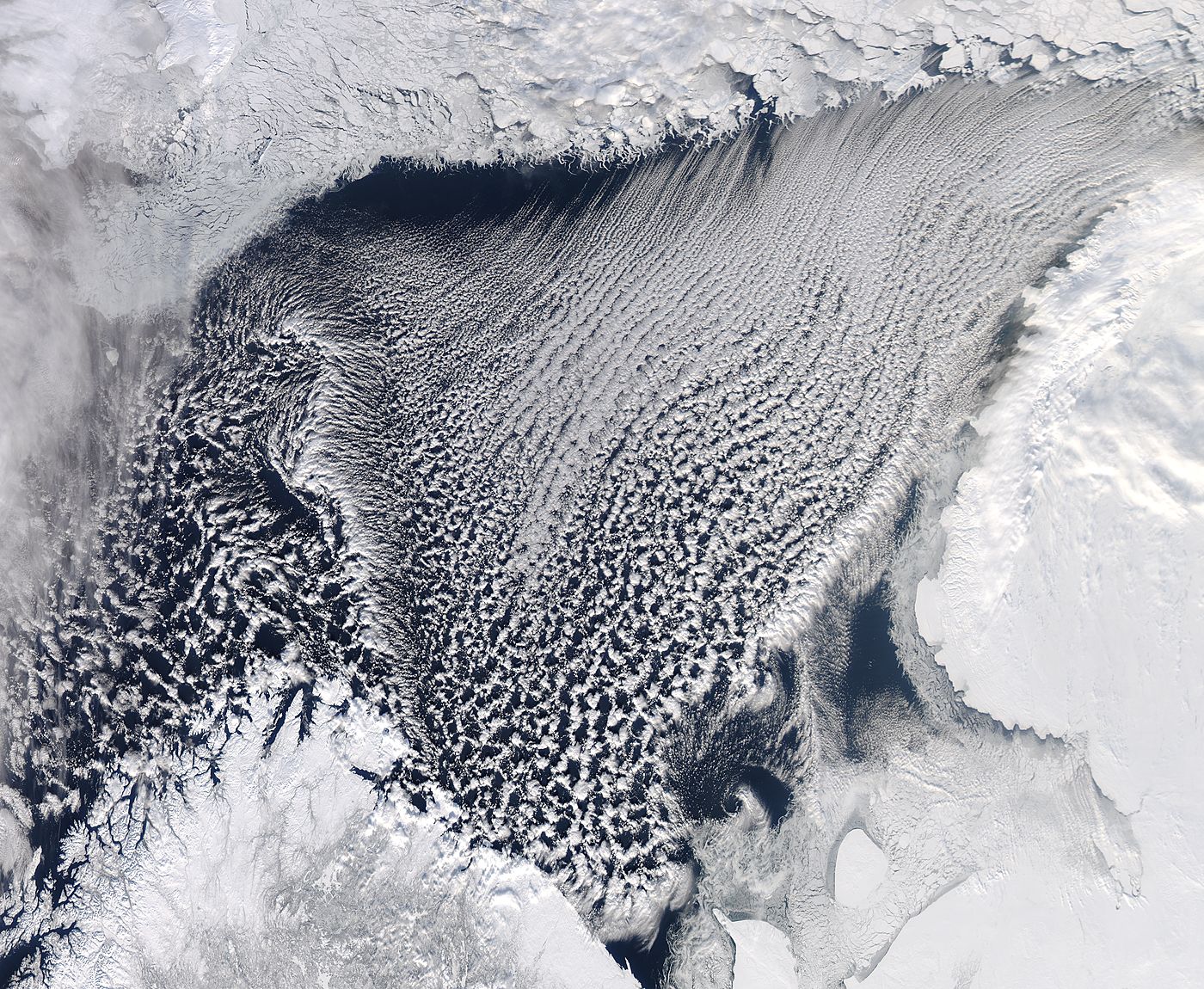
Many of the threats we know are associated with climate change are slow moving. Gradually rising seas, a steady uptick in extreme weather events, and more all mean that change will come gradually to much of the globe. But we also recognize that there can be tipping points, where certain aspects of our climate system shift suddenly to new behaviors.
The challenge with tipping points is that they’re often easiest to identify in retrospect. We have some indications that our climate has experienced them in the past, but reconstructing how quickly a system tipped over or the forces that drove the change can be difficult. Now, a team of Norwegian scientists is…
View original post 972 more words
Surging wind, solar, electrical vehicle and battery storage production provide the world with the opportunity to start reducing annual carbon emissions in the near term. And one clean energy leader appears set to break new ground toward achieving that helpful goal.
(Tesla appears set to achieve goals, squeeze shorts, and help make clean energy more accessible for everyone.)
According to recent reports from Electrek, a Tesla employee recently leaked that Gigafactory battery pack production for the Model 3 has averaged 5,000 per week during June. If true, it shows that one key portion of the Tesla Model 3 line is humming along at a very strong rate of production commensurate with the company’s sky-high goals.
In addition, we have recently discovered that Tesla has not one, not two, but three production lines running for the Model 3 at its Fremont factory. During April and May Tesla constructed a…
View original post 358 more words

Strange sponge-like fossil creature from half a billion years ago
June 19, 2018
Summary: A discovery of a new species of sponge-like fossil from the Cambrian Period sheds light on early animal evolution.
Scientists have discovered the fossil of an unusual large-bodied sponge-like sea-creature from half a billion years ago.
The creature belongs to an obscure and mysterious group of animals known as the chancelloriids, and scientists are unclear about where they fit in the tree of life.
They represent a lineage of spiny tube-shaped animals that arose during the Cambrian evolutionary “explosion” but went extinct soon afterwards. In some ways they resemble sponges, a group of simple filter-feeding animals, but many scientists have dismissed the similarities as superficial.
The new discovery by a team of scientists from the University of Leicester, the University of Oxford and Yunnan University…
View original post 285 more words


 Wild Voices