Update: Wild Horse & Burro Legislation

R.T. Fitch's avatarStraight from the Horse's Heart

Our sources tell us that the Senate Appropriations Committee passed the Fiscal Year 2019 Appropriations legislation, yesterday, with no amendments regarding our wild horse and burros.  At first glance it appears that the bill maintains protections against destruction of healthy horses and burros and sale for slaughter and does not contain any provisions similar to the House language authorizing mass sterilization.

We are cautiously optimistic but will not know until the bill language is released to the public whether any language concerning regarding sterilization is in.

Once again, the differences between the House bill and the Senate bill will be worked out in conference committee. Last year, House language authorizing the destruction of tens of thousands of healthy wild horses and burros was rejected by the Senate and was not included in final spending legislation.  Let us hope that the same is reflected in this year’s action.

Stay tuned.

Update:…

View original post 5 more words

A little bit of wild June

hethersettbirding's avatarHethersett Birdlife

We have hit the middle of #30dayswild the wildlife trusts annual invitation to do something wild and revel in nature each day even if it is only for a few minutes. Today having checked out their website I discovered they even have an ap which I shall be using to see what random acts of wildness appear to enrich the lives of my 9 year old assistant and myself.

Image-1 Who Can resist a random wildness button?
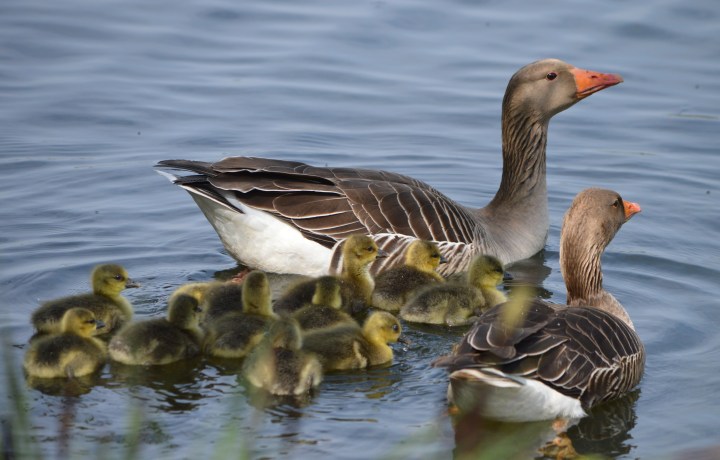
Early wild events have included the less random but no less enjoyable visits to the wild places near the village including one to one of my WEBS sites. The large lake was very busy on arrival with huge rafts of moulting greylag geese some with youngsters. There were also good numbers of Canada and Egyptian geese and even a little barnacle goose for good measure.

Awww theyre adorable chicks Greylags with fluffy offspring.

There were plenty of other…

View original post 307 more words

For Nevada’s Wild Horses, Extinction is Forever without Life-Sustaining Water

debbiecoffey's avatarStraight from the Horse's Heart

by Love Wild Horses©

It was a century after Nevada’s wild horses first settled into the Great Basin that Congress unanimously passed the Wild Free-Roaming Horse and Burro Act to protect wild horses and maintain the ecological balance of the public lands they had claimed as their home.

The 1971 act described these wild horses and burros as “an integral part of the natural system of public lands,” and mandated the preservation and protection of these “living symbols of the historic and pioneering spirit of the West.”

Five decades later, Nevada’s bands of wild horses are the last of these sacred, American icons.  Surviving and thriving over a century of mustanging, round-ups, and slaughter, these battle-born natives of Nevada are more than a symbol, they are the true ancestors of the spirit of power and freedom that comes from the essence of our being.

And today, still, they…

View original post 269 more words

Climate Change Indicated in Forced Migration of 1.7 Million from Mekong Delta

robertscribbler's avatarrobertscribbler

Global sea level rise caused by fossil fuel burning is an issue that is creating worsening impacts to cities, nations, and civilization itself. And according to recent reports out of Vietnam, 1.7 million people have migrated from the low-lying Mekong Delta region over the past decade. Primary causes included climate change and poverty.

(Sea level rise now threatens all low-lying regions with increased flooding, loss of crops, and, in some cases, forced migration. Recent reports indicate that hundreds of thousands have already left the Mekong delta as a result.)

Rising oceans have forced Vietnam to erect a system of dykes of up to 4 meters in height in an increasingly complex system of coastal defense barriers. These barriers have saved lands from inundation as the ocean off the low-lying Mekong Delta continues to rise year-after-year. However, the dykes have not prevented salt water from moving further and further up…

View original post 234 more words

Pope warns oil executives: Climate change may ‘destroy civilization’

Exposing the Big Game's avatarExposing the Big Game

Pope warns oil executives: Climate change may ‘destroy civilization’
© Getty Images

Pope Francis on Saturday issued a dire warning to top oil executives, saying that climate change could “destroy civilization.”

At a two-day conference at the Vatican, the pope called climate change a challenge of “epochal proportions,” according to Reuters.

He also said that the world must move toward using clean energy and a reduction in the use of fossil fuels.

“Civilization requires energy but energy use must not destroy civilization,” Francis said.

The conference, organized by the University of Notre Dame in the United States, brought together executives from asset manager BlackRock, BP and Norwegian oil and energy company Equinor, among others.

The event was prompted by Francis’s 2015 papal encyclical blaming humans for climate change and criticizing world leaders for not acting swiftly enough to address it.

The conference comes a little less than a year after President Trump

View original post 168 more words

Why Do Turtles Have Shells?

Sandy Steinman's avatarNatural History Wanderings

ScienceDaily reports

Scientists have discovered the real reason turtles have shells. While many thought turtle shells were for protection, new findings show that the shells were actually for digging underground to escape the harsh South African environment where these early proto turtles lived.

Read article at Real reason turtles have shells: Burrowing tool: Dr. Tyler Lyson co-authors paper about turtle shells as a burrowing tool, not for protection as previously thought — ScienceDaily

View original post

Urgent: House Appropriations to Vote on BLM Anti-Wild Equine Budget this Wednesday

R.T. Fitch's avatarStraight from the Horse's Heart

Call to action:

The House Appropriations Committee has scheduled its “mark up” on the spending bill for the Interior Department, including the BLM’s Wild Horse & Burro Program, this Wednesday, June 6 starting at 10 am Eastern.  
 

by Carol Walker of Wild Horse Freedom Federation

We just learned that Rep. Chris Stewart (R-Utah) will introduce an amendment recommending permanent sterilization of wild equines on the range.  While not the same as the mass killing program that the horse-haters previously advocated, this would lead to the slow death of Amrica’s free-roaming herds.  It would also subject thousands of wild mares and burro jennets to a brutally unsafe sterilization technique, ovariectomy by colpotomy.

 
If you haven’t yet contacted your representative and reached out to members of the House Appropriations committee, please contact those you can today.  Urge them in your own words to:
 
 Oppose any amendment…

View original post 137 more words

Red spruce comeback in American forests

petrel41's avatarDear Kitty. Some blog

This video from the USA says about itself:

Restoring Red Spruce in the Southern Appalachians

10 November 2015

Sue Cameron from the [U.S. Fish and Wildlife] Service’s Asheville Field Office recently joined staff from the Southern Highlands Reserve collecting red spruce cones on Pisgah National Forest, near Mount Mitchell, the highest peak in the Eastern United States. The cone collection is the first step in a multi-year process to restore red spruce to areas where it was found before the extensive logging and burning at the turn of the 20th century.

The Southern Appalachians are home to the highest peaks in the eastern United States and red spruce is a key part of the forests on those mountain-top areas. Unfortunately, the amount of red spruce found there today is a fraction of what stood 150 years ago. These forests were decimated by logging, which was followed by intensive fires which…

View original post 677 more words

Please Contact USF&WS Regarding How to Comment on Wolf Delisting in Wisconsin…

Please Contact USF&WS Regarding How to Comment on Wolf Delisting in Wisconsin…

Unknown's avatarWolves of Douglas County Wisconsin Film Company

The news is coming out that USF&WS is planning a public comment period soon. In this blog are email and phone contact for USF&WS offices and personal. Please contact them and ask them for more information on when and where to comment. Wisconsin’s wild wolf needs your voices before it’s too late. Help him survive…

Read Our latest blog HERE on wolf delisting.

If USF&WS, the government, gets it right this time in delisting the Gray wolf in the Great Lakes Region Wisconsin citizens must push for greater transparency in wolf management. Because trophy hunts are about power not conservation. We owe the Gray wolf, that was exterminated from our forest and now making a comeback, an ethical & compassionate conservation management plan, because we have done enough harm to this iconic predator.

Wolves are a part of Wisconsin’s wild legacy. Trophy hunts are about power not conservation. Protect Wisconsin’s…

View original post 180 more words

The 8 Million Species We Don’t Know

Sandy Steinman's avatarNatural History Wanderings

The New York Times  reports

Paleontologists estimate that before the global spread of humankind the average rate of species extinction was one species per million in each one- to 10-million-year interval. Human activity has driven up the average global rate of extinction to 100 to 1,000 times that baseline rate.

The most striking fact about the living environment may be how little we know about it. Even the number of living species can be only roughly calculated. A widely accepted estimate by scientists puts the number at about 10 million. In contrast, those formally described, classified and given two-part Latinized names (Homo sapiens for humans, for example) number slightly more than two million. With only about 20 percent of its species known and 80 percent undiscovered, it is fair to call Earth a little-known planet.

Read full story The 8 Million Species We Don’t Know – The New York Times

View original post