Five Minutes with a River Otter

Jet Eliot's avatarJet Eliot

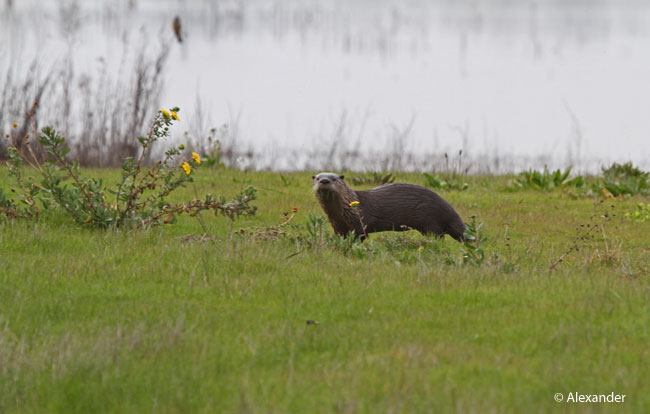
River Otter walking

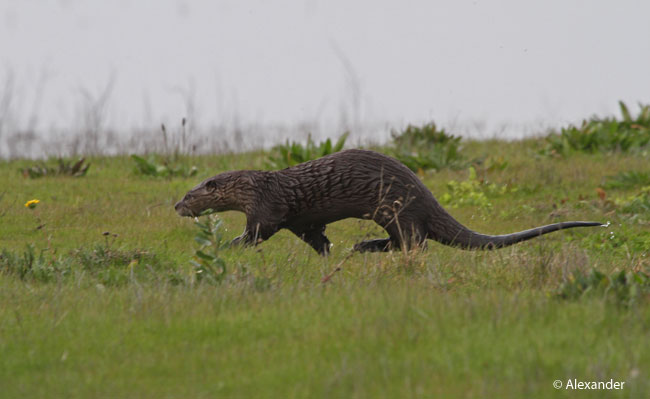
In January I went to a flooded agricultural field to observe ducks and cranes. At one point there was a curious underwater movement…unidentifiable. We waited, and watched. And a river otter popped out!

River otter swimming in field

We have been going to this field for three decades, have spent close to 50 hours observing wildlife on this one field. Every winter it is loaded with songbirds, ducks, cranes, raptors, waders, and more…but we have never seen an otter here.

Flooded field with ducks, January 2019. Compare this scene to the photo below from January 2014.

We have, however, seen the river otter hunting on a nearby river several times.
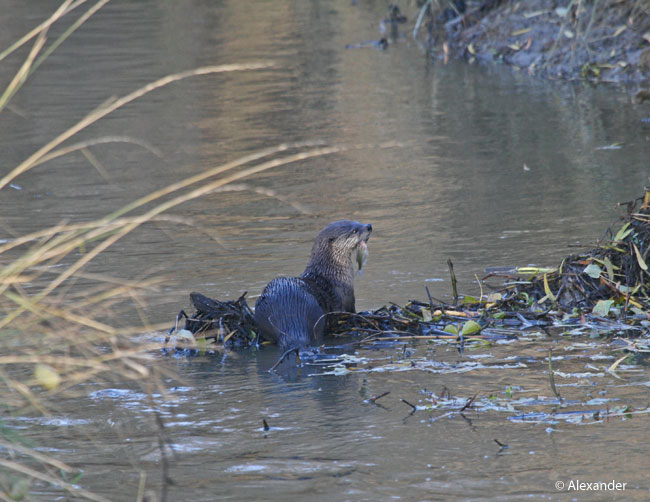
River otter with fish. December 2008

There are 13 species of otters on earth, and they are all aquatic in nature, feeding primarily on fish and invertebrates. In North America we have the river otter (our focus…

View original post 426 more words

RESTORING ARCTIC ICE IS THE KEY TO CURBING CLIMATE CHANGE—SO WHY ARE WE IGNORING IT?

Exposing the Big Game's avatarThe Extinction Chronicles

This dangerous ice loss can be reversed, and the emerging field of climate restoration is yielding surprising solutions to the challenges of global warming.
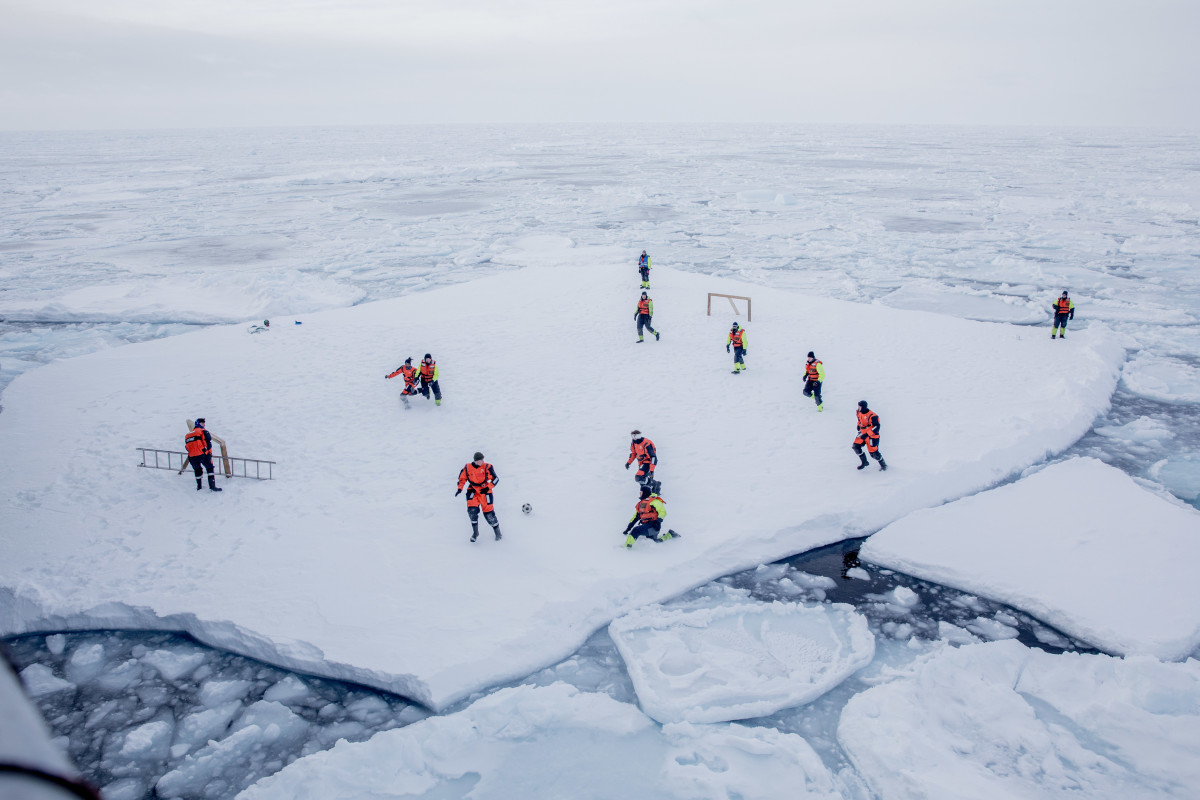
The crew of patrol vessel KV Svalbard and scientists from the Norwegian Institute of Marine Research play football on a floe of offshore ice on March 22nd, 2018, in the sea around Greenland, while two armed guards keep watch for polar bears.

The crew of patrol vessel KV Svalbard and scientists from the Norwegian Institute of Marine Research play football on a floe of offshore ice on March 22nd, 2018, in the sea around Greenland, while two armed guards keep watch for polar bears.

(Photo: Marius Vagenes Villanger/AFP/Getty Images)

A series of scientific reports released in the last few months found that Arctic ice is melting at an accelerated and catastrophic rate—the fastest rate in the last 350 years. If it continues at that rate, the Arctic could be completely free of summer ice by the year 2030, or even sooner. The most recent study, which concentrated on the southwest part of Greenland—a region with few large glaciers, and one which was previously…

View original post 1,437 more words

Fin whales and mountain gorillas back from the brink of extinction thanks to conservation efforts

Exposing the Big Game's avatarExposing the Big Game

‘With sustained, long-term conservation action, we can not only prevent extinctions, but also achieve considerable population recoveries’

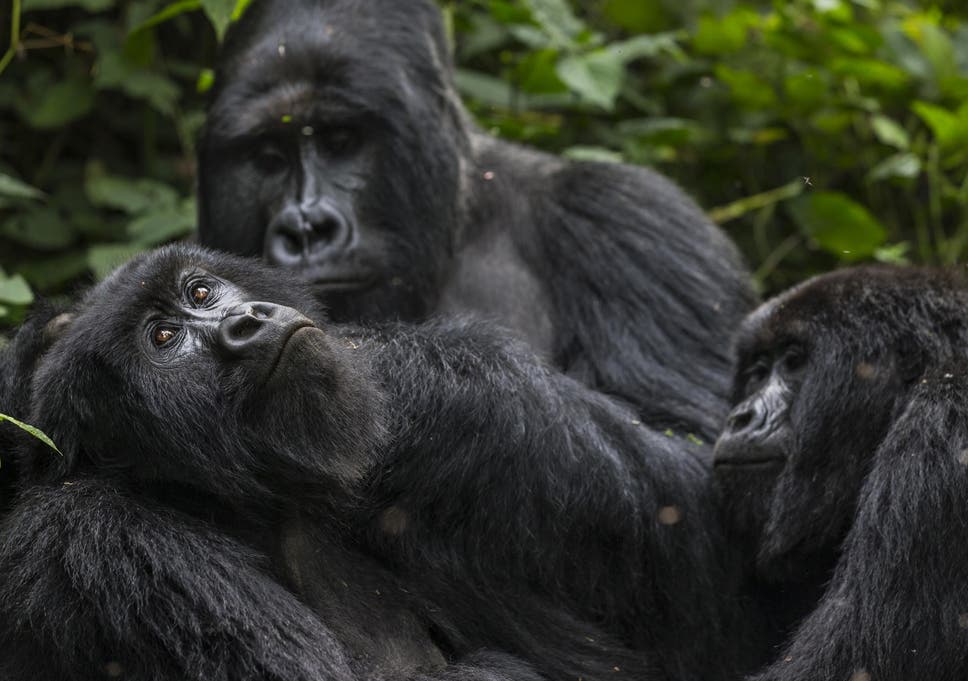
Anti-poaching efforts have helped boost mountain gorilla numbers by hundreds in recent decades
Anti-poaching efforts have helped boost mountain gorilla numbers by hundreds in recent decades ( Getty )

There is hope for the survival of fin whales and mountain gorillas after conservationists announced both species have been pulled back from the brink of extinction.

After decades of persecution by whaling vessels and poachers, modern efforts to protect these mammals appear to be working as their numbers have started to recover.

The International Union for Conservation of Nature (IUCN) maintains a “red list” to monitor the status of the world’s wildlife, and in its latest update both whales and gorillas have shifted one step further away from becoming new entries on the long list of species wiped out by humanity.

After…

View original post 588 more words

Life thrived on Earth 3.5 billion years ago, research suggests

Exposing the Big Game's avatarThe Extinction Chronicles

Scientists use stable sulfur isotopes to understand ancient microbial metabolism

Date:
February 8, 2019
Source:
Tokyo Institute of Technology
Summary:
Three and a half billion years ago Earth hosted life, but was it barely surviving, or thriving? A new study provides new answers to this question. Microbial metabolism is recorded in billions of years of sulfur isotope ratios that agree with this study’s predictions, suggesting life throve in the ancient oceans. Using this data, scientists can more deeply link the geochemical record with cellular states and ecology.

Electron microscopy image of microbial cells which respire sulfate.
Credit: Guy Perkins and Mark Ellisman, National Center for Microscopy and Imaging Research

Three and a half billion years ago Earth hosted life, but was it barely surviving, or thriving? A new study carried out by a multi institutional team with leadership including the Earth-Life Science Institute (ELSI) of Tokyo Institute of Technology…

View original post 740 more words

Oldest seed-eating perching bird discovered

petrel41's avatarDear Kitty. Some blog

https://youtu.be/75posEbWeZs

This 7 February 2019 video is called Ancestor to modern day sparrows flew around 52 million years ago.

From the Field Museum in the USA:

Earliest known seed-eating perching bird discovered in Fossil Lake, Wyoming

February 7, 2019

Summary: The ‘perching birds‘, or passerines, are the most common birds in the world today — they include sparrows, robins, and finches. They used to be very rare. Scientists have just discovered some of the earliest relatives of the passerines, including a 52-million-year-old fossil with a thick, curved beak for eating seeds.

Most of the birds you’ve ever seen — sparrows, finches, robins, crows — have one crucial thing in common: they’re all what scientists refer to as perching birds, or “passerines”. The passerines make up about 6,500 of the 10,000 bird species alive today. But while they’re everywhere now, they were once rare…

View original post 557 more words

How snakes lost their limbs

petrel41's avatarDear Kitty. Some blog

This February 2018 video says about itself:

90 million years ago, an ancient snake known as Najash had…legs. It is by no means the only snake to have limbs either. But what’s even stranger: we’re not at all sure where it came from.

From the Fundação de Amparo à Pesquisa do Estado de São Paulo in Brazil:

Research explains how snakes lost their limbs

The study is part of an effort to understand how changes in the genome lead to changes in phenotypes

February 6, 2019

Snakes and lizards are reptiles that belong to the order Squamata. They share several traits but differ in one obvious respect: snakes do not have limbs. The two suborders diverged more than 100 million years ago.

Identification of the genetic factors involved in this loss of limbs is a focus of the article “Phenotype loss is associated with widespread divergence of the gene regulatory…

View original post 857 more words

Belize Wildlife, Part 2 of 2

Jet Eliot's avatarJet Eliot

Brown Basalisk Lizard in Belize

In addition to the abundant bird species found in Belize, as featured last week, there is also an impressive array of reptiles, mammals, and insects. Welcome to Part 2 of the Belize Wildlife series.

 Part 1 of Belize Wildlife. 

Native to Belize, the brown basilisk lizard is known for its ability to “walk on water.” With large hind feet and web-like toes, they fly so quickly across the water’s surface that it produces the illusion of the lizard running on water.

A quiet river boat ride revealed this basilisk lizard basking beside the river. Like most lizards, the basilisks have varying colors.

Basilisk Lizard, Belize, Central America

The green iguana, which is not always green, was prevalent in many parts of the country. They are the largest lizard in Belize. We came upon this one on the outskirts of Belize City, he was about three…

View original post 409 more words

Dutch Winterswijk Triassic fossils, new study

petrel41's avatarDear Kitty. Some blog

This May 2018 video is called Dutch Minerals and [Triassic] Fossils / Winterswijk.

I myself was at this quarry. Unfortunately, only the path at the top is accessible for the public. So, I saw only a willom warbler, not the nesting eagle owls and Triassic fossils below.

From the University of Bonn in Germany:

Fossil deposit is much richer than expected

Paleontologist analyses finds from the Dutch town of Winterswijk

January 14, 2019

It has long been known that a quarry near the Dutch town of Winterswijk is an Eldorado for fossil lovers. But even connoisseurs will be surprised just how outstanding the site actually is. A student at the University of Bonn, himself a Dutchman and passionate fossil collector, has now analyzed pieces from museums and private collections for his master’s thesis. He found an amazing amount of almost completely preserved skeletons, all between 242 and 247…

View original post 437 more words

Singing humpback whales, new research

petrel41's avatarDear Kitty. Some blog

This video from australia says about itself:

Humpback Whale Singing Hervey Bay 2014

Be sure to have your volume up for this clip. The audio and video were filmed using a GoPro on separate days with the audio being some of the most stunning whale singing that we have heard in many years. The video is yet more footage of our curious friend ‘scratchy’.

From the Wildlife Conservation Society:

Giant singers from neighboring oceans share song parts over time

January 8, 2019

Singing humpback whales from different ocean basins seem to be picking up musical ideas from afar, and incorporating these new phrases and themes into the latest song, according to a newly published study in Royal Society Open Science that’s helping scientists better understand how whales learn and change their musical compositions.

The new research shows that two humpback whale populations in different ocean basins (the South Atlantic…

View original post 820 more words