Acebuches de El Rocio – Much more than ‘just’ wild olive trees

Acebuches de El Rocio – Much more than ‘just’ wild olive trees

Nick Rowan's avatarThe Treeographer

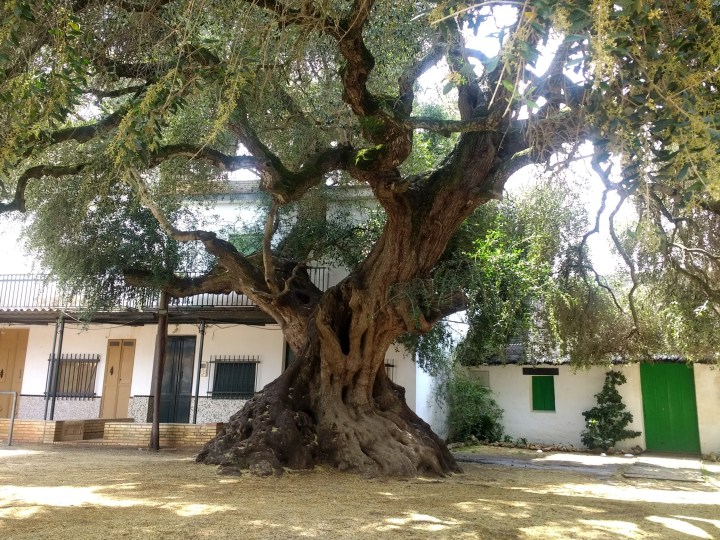
Tucked away just outside of Doñana Natural Park in Huelva, Spain, a small grove of wild olive trees has survived for centuries, even as the landscape around it underwent radical transformation. The Acebuches de El Rocio are a group of 15 ancient wild olive trees located in Plaza Acebuchal in the village of El Rocio. Wild olive trees (acebuches in Spanish) are native to the Iberian Peninsula, and despite their humble reputation, they are much more than just uncultivated olives.

View original post 1,317 more words

FALSE STATEMENTS ARE A FEDERAL CRIME PUNISHABLE BY PRISON TIME BLM – RELEASES FALSE POPULATION STATISTICS FOR WILD HORSES AND BURROS

R.T. Fitch's avatarStraight from the Horse's Heart

By Grandma Gregg

“BLM states biologically and mathematically impossible annual wild horse population rates…”

The Bureau of Land Management (BLM) recently posted their annual Wild Horse and Burro Herd Statistics and as usual, it is full of false statements. WHY is this so important? Because these are the figures that BLM gives to Congress when requesting funding for wild horse and burro capture and management plans.

BLM states biologically and mathematically impossible annual wild horse population rates and here are just a very few, of many false statement examples that BLM has published:

High Rock Herd Management Area (HMA) a 107% increase in ONE year (a herd of 447 horses produced 479 successful foals in one year which would require that every single horse – including the stallions! – have more than one surviving foal in one year). The previous year, BLM states that this same HMA had an increase…

View original post 705 more words

Lawsuits to Protect Migratory Birds

Sandy Steinman's avatarNatural History Wanderings

Center for Biological Diversity News Release

Lawsuits Seek to Restore Federal Protections for Migratory Birds

WASHINGTON— A coalition of national environmental groups today filed litigation in the Southern District of New York challenging the Trump administration’s move to eliminate longstanding protections for waterfowl, raptors and songbirds under the Migratory Bird Treaty Act (MBTA).

Groups filing the litigation — National Audubon Society v. Department of the Interior —included the American Bird Conservancy, Center for Biological Diversity, Defenders of Wildlife, National Audubon Society, National Wildlife Federation and the Natural Resources Defense Council.

In a legal opinion issued December 2017, the Trump administration abruptly reversed decades of government policy and practice — by both Democratic and Republican administrations — on the implementation and enforcement of the MBTA.

View original post 681 more words

Wild Horse Management Plan Would ‘Guarantee Extinction,’ Mustang Advocates Say

R.T. Fitch's avatarStraight from the Horse's Heart

By Kristin Hugo as published on Newsweek

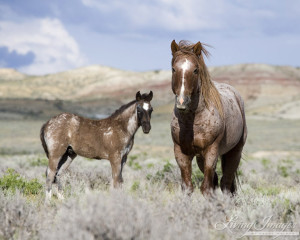
photo by Carol Walker of Wild Horse Freedom Federation

The Bureau of Land Management (BLM) recently proposed a series of options that would drastically reduce the number of mustangs on public lands. Some horse lovers think the plan would be too effective and wipe out the animals completely.

The options include offering people $1,000 each to adopt a horse, reducing restrictions on adoptions—including allowing people to buy them for horsemeat—sterilizing them and killing them. The BLM said a combination of those options should reduce the American mustang population by 69 percent over six to 12 years.

Wild horses have been a matter of intense public debate for decades. Cattle ranchers believe that the horses are an invasive species, which damage the landscape. The ranchers benefit from having the horses removed so they can put cattle, which are invasive, on the land.

“According to the law, the cattle are permitted,” Bob…

View original post 481 more words

Australian birds from different species help each other

petrel41's avatarDear Kitty. Some blog

This video says about itself:

Amazing footage of Western Australia’s Splendid Fairy-wren

15 October 2012

This amazing footage of singing and dancing Splendid Fairy-wrens was taken by Birds in Backyards ambassador Angus Stewart during a spring 2012 visit to Western Australia. Be an Aussie Bird friend by registering for free membership at http://birdsinbackyards.net.

From the University of Chicago Medical Center in the USA:

Birds from different species recognize each other and cooperate

Researchers show for the first time how birds from two different species recognize individuals and cooperate for mutual benefit

May 21, 2018

Summary: Scientists show how two different species of Australian fairy-wrens not only recognize individual birds from other species, but also form long-term partnerships that help them forage and defend their shared space as a group.

Cooperation among different species of birds is common. Some birds build their nests near those of larger, more aggressive species

View original post 907 more words

Giraffes, new research

petrel41's avatarDear Kitty. Some blog

This video is called Giraffes 101 | National Geographic Wild.

From the University of Bristol in England:

Giraffes surprise biologists yet again

May 18, 2018

New research from the University of Bristol has highlighted how little we know about giraffe behaviour and ecology.

It is commonly accepted that group sizes of animals increase when there is a risk of predation, since larger group sizes reduce the risk of individuals being killed, and there are ‘many eyes’ to spot any potential predation risk.

Now, in the first study of its kind, Bristol PhD student Zoe Muller from the School of Biological Sciences has found that this is not true for giraffes, and that the size of giraffe groups is not influenced by the presence of predators.

Zoe Muller said: “This is surprising, and highlights how little we know about even the most basic aspects of giraffe behaviour.”

This study…

View original post 485 more words

That NASA climate science program Trump axed? House lawmakers just moved to restore it

Robert A. Vella's avatarThe Secular Jurist

The House appropriations panel that oversees NASA unanimously approved an amendment to a 2019 spending bill that orders the space agency to set aside $10 million within its earth science budget for a “climate monitoring system” that studies “biogeochemical processes to better understand the major factors driving short and long term climate change.”

That sounds almost identical to the work that NASA’s Carbon Monitoring System (CMS) was doing before the Trump administration targeted the program, which was getting about $10 million annually, for elimination this year. Critics of the move said it jeopardized numerous research projects and plans to verify the national emission cuts agreed to in the Paris climate accords.

[…]

The bill now goes to the full House, and ultimately will need to be reconciled with a parallel bill in the Senate. It will likely be several months before Congress completes action on the 2019 budget.

Continue reading: 

View original post 14 more words

The plight of wild horses, part two

1parttwodreamstime_xs_22302503


 By Sharon St Joan


To read part one first, click here.


Are wild horses native?


While it is generally assumed that wild horses are descended from the horses that the Spanish conquistadors left behind in the Sixteenth Century, there is considerable evidence that the native wild horses of the west may never have died out at all and may always have been present on this land.


Craig Downer in his remarkable book The Wild Horse Conspiracy details twenty separate examples of fossilized remains of wild horses scientifically dated to between 700 years before the present to 7,000 years before the present. All these fossils appear on this continent during the thousands of years during which wild horses were believed to have been absent from the Americas.


Craig Downer also gives a fascinating account of the ways in which the presence of wild horses benefits the land. Contrary to the picture that is often presented, they consume coarser, drier vegetation, which allows many kinds of grasses and other vegetation to thrive, creating greater biodiversity and a healthier eco-system.


Whether they have always lived here, without interruption, may be debated, but two things are not open to debate: No one disputes the fact that all horses originated in the Americas. North and South America are the only homeland of the horse – all the horses on earth trace their ancestry back to the Americas. Whether they were here, then gone for a time – just a blip on the geological time scale, of a few thousand years – or whether they never left at all and have always been right here, the indisputable fact remains that they have no other home. This is their original native land. They are American wild horses.


Secondly, native or not, there is no excuse for the inhumane and brutal treatment to which wild horses are being subjected.


All animals should be treated humanely.


2parttwoID 99529976 © Lynnbellphoto : dreamstime_xs_99529976


We are not talking here about private land, but about both state and public land. Do we want the wild horses whose native home is our western wild lands to be sacrificed to business and industry? We must leave the wild lands and the wild animals that live there free to live and be wild. The world of nature is not something to be used up as fast as possible. If we do that, in the end we will all be left with nothing, only a ruined wasteland. Instead, let us open our eyes. Let us value and be grateful for the God-given blessing of being able to live in a land of immense beauty among innocent, majestic animals.


Who would not be moved by the soaring beauty of wild horses running in joy, their manes flying in the wind?


Wild horses, like all sentient beings, have a soul and a spirit. We need to drop our human concerns for a moment of silence and listen to the voices of the wild – to the soul of wild America.


Our fellow beings on the earth are our brothers and sisters; we are all interconnected; we are all children of the earth.


Can we stand by idly while those around us destroy the natural world – failing to speak up for it, or to protect it, or to value its beauty and its sacred essence?


Wild horses cannot speak up for themselves. It is up to us to take the time and show the willingness and the courage to speak up behalf of these innocent wild beings. Then, whatever the outcome, we will have done our best.


Links:


BLM press release requesting comments before May 20, 20:

https://www.blm.gov/press-release/blm-seeks-public-comment-environmental-analysis-wild-horse-gather-southeastern-utah


BLM oil and gas leasing proposal for the San Rafael Swell – Scroll down to the San Rafael Desert Master Leasing Plan:

https://www.blm.gov/programs/planning-and-nepa/plans-in-development/utah


The Wild Free-Roaming Horses and Burros act of 1971

https://www.blm.gov/or/regulations/files/whbact_1971.pdf


Salt Lake Tribune on BLM’s plan for wild horses:

https://www.sltrib.com/news/environment/2018/04/27/feds-calling-for-massive-roundups-of-wild-horses-on-public-lands-says-report-quietly-slipped-to-congress/


House of Representatives and BLM proposal:

https://americanwildhorsecampaign.org/media/statement-response-house-interior-appropriations-committtee-markup-fy-2018-interior-bill


YouTube video about wild horses:

https://www.youtube.com/watch?v=O26lZ0nX30U&feature=share


Craig C. Downer’s book, The Wild Horse Conspiracy, is available on Amazon.


Photo credits, part two:


First photo:

ID 22302503 © Matthew Ragen / Dreamstime.com, in the Ochoc mountains of Central Oregon.


Second photo:

ID 99529976 © Lynnbellphoto / Dreamstime.com, the Ute Reservation


The plight of wild horses, part one

Arizona_2004_Mustangs


By Sharon St Joan


Utah’s wild horses 


The word “gather” sounds like such a gentle word, like gathering wildflowers on a spring day. But for wild horses, as in the “Muddy Creek Wild Horse Gather Plan EA,” it’s meaning is anything but gentle. It hides a brutal reality – being herded by helicopter, then being sent off to holding pens where they are likely to spend the rest of their lives in captivity. In the blink of an eye, lost to each of these horses is their freedom, their family, and their wild way of life. This is like taking a bird from the sky and keeping it in a cage.


The Muddy Creek Herd Management Area in Emery County, Utah – 283,000 acres of public and state land – lies in the San Rafael Swell –- a juniper/pinion area of spectacular rock formations.  The “Gather” Plan, proposed by the BLM for the San Rafael Swell would remove “excess” horses and also carry out fertility “treatments” (another of those euphemistic words) to prevent the remaining wild horses from breeding. These “treatments” are intrusive, have to be repeated every year, and are harmful to the lives and the social order of the horses and their relationships to each other. Some horses will be removed and put up for “adoption.” We’ll come back to “adoption” in a moment.


Utah wild horse land to be used for oil and gas?


On the BLM website, one can also find the San Rafael Desert Master Leasing Plan, a proposal for oil and gas leasing on 525,000 acres of public land in the San Rafael Desert – this is the San Rafael Swell –  where the wild horses live.


One might ask, if there is not enough land to support the horses – indeed, so little land that some of the horses have to be removed from the wild and those remaining prevented from having offspring – then how can there be enough land for oil and gas development? Apparently, there is a lot of land for oil and gas, but not enough for the wild horses.


As is the case all over the west, there is fierce competition for the use of state and public land between wild horses and business interests, whether they be oil, gas, or other mining or ranching interests.


The San Rafael Swell is also an increasingly popular tourist area. But the tourists, like the horses, seem to be left standing out in the cold.


How to comment – comments due on May 20, 2018


Please find the link below, at the end of part two, to read the BLM press release calling for comments on the Muddy Creek Wild Horse Gather.


The BLM is requesting comments before May 20, 2018, on the Muddy Creek Wild Horse Gather Plan EA. You may send your comment to blm_ut_pr_whb@blm.gov


Horsescd1l-095


A threat to the survival of American wild horses


There is another serious threat to the survival of wild horses.  In April, the BLM submitted a proposal that the number of wild horses running free should be severely curbed to 27,000 wild horses in total, and that the surplus, as well as the tens of thousands who are already being kept permanently in holding pens, should be sent to slaughter. Most Americans are horrified by the concept of slaughtering horses; this is against the will of the American public.


The House Interior Appropriations Subcommittee has since passed the 2019 spending bill on to the full Committee, without authorizing the slaughter of horses; however, this does not mean that the horses are out of danger – further changes may be made, and provisions may be slipped in which would result in the slaughter of horses and increased horse roundups to deprive horses of their freedom. Every year there is re-newed pressure to allow the slaughter of wild horses and/or to drive them off the land.


You may send your comment about this to your representatives in Congress.


The Wild Free-Roaming Horses and Burros act of 1971


The Act, passed by Congress in 1971, begins with these words:

“Congress finds and declares that wild free-roaming horses and burros are living symbols of the historic and pioneer spirit of the West; that they contribute to the diversity of life forms within the Nation and enrich the lives of the American people; and that these horses and burros are fast disappearing from the American scene. It is the policy of Congress that wild free-roaming horses and burros shall be protected from capture, branding, harassment, or death; and to accomplish this they are to be considered in the area where presently found, as an integral part of the natural system of the public lands.”

Nearly fifty years later – sadly, this Act, with such noble intentions, has been contravened and undermined at every turn over the decades since its passing. Many of the Herd Management Areas set aside for wild horses have been shrunken, disappeared altogether, or taken over by cattle grazing. Horses, meant to be protected by law, have been systematically deprived of access to water, of their land, their freedom, and even their lives.

Mustang_Utah_2005_2


Adoption and excess wild horses


There is a popular fiction that most captured wild horses are “adopted” by the public – another of those words that obscures reality. Only a small percentage of these displaced animals are ever, in fact, adopted.


A lucky few may be adopted and well-treated by a kind owner, but even for these few, domestication will never replace their wild days, spent with their own families, racing in the wind up the hillsides and through the streams of the open country where they were born. That way of life will be forever lost to them. Around 45,000 rounded-up wild horses are now being confined permanently in holding pens across the west.


What is an “excess” wild horse?  Horses now occupy less than half the land they were allotted by the Wild Horse and Burro Act of 1971.  Many herds have been zeroed out entirely, and others have been greatly diminished. Yet the march towards eliminating them entirely continues.


The Daily Pitch Fork gives 2014 statistics, quoting BLM sources: There were 56,000 wild horses on BLM and US Forest Service land – and 2.1 million cattle. In other words, on the 250 million acres where grazing is allowed, 97% is used by cattle and 3% is used by wild horses. Yet cattle are a commercial business interest that can be grazed on private land; they are not native wildlife.


 Continued in part two – click here.


 Photo Credits, part one:


First photo:

John Harwood, Wikipedia, Creative Commons Attribution, 2.0 Generic, wild horses at Chinley. AZ.


Second photo:

BLM, public domain, Wikipedia, Wild stallion Lazarus and part of his band in West Warm Springs HMA, OR.


Third photo:

 Jaime Jackson, Wikipedia, Creative Commons Attribution-Share Alike 3.0 Unported, wild horses in Utah.